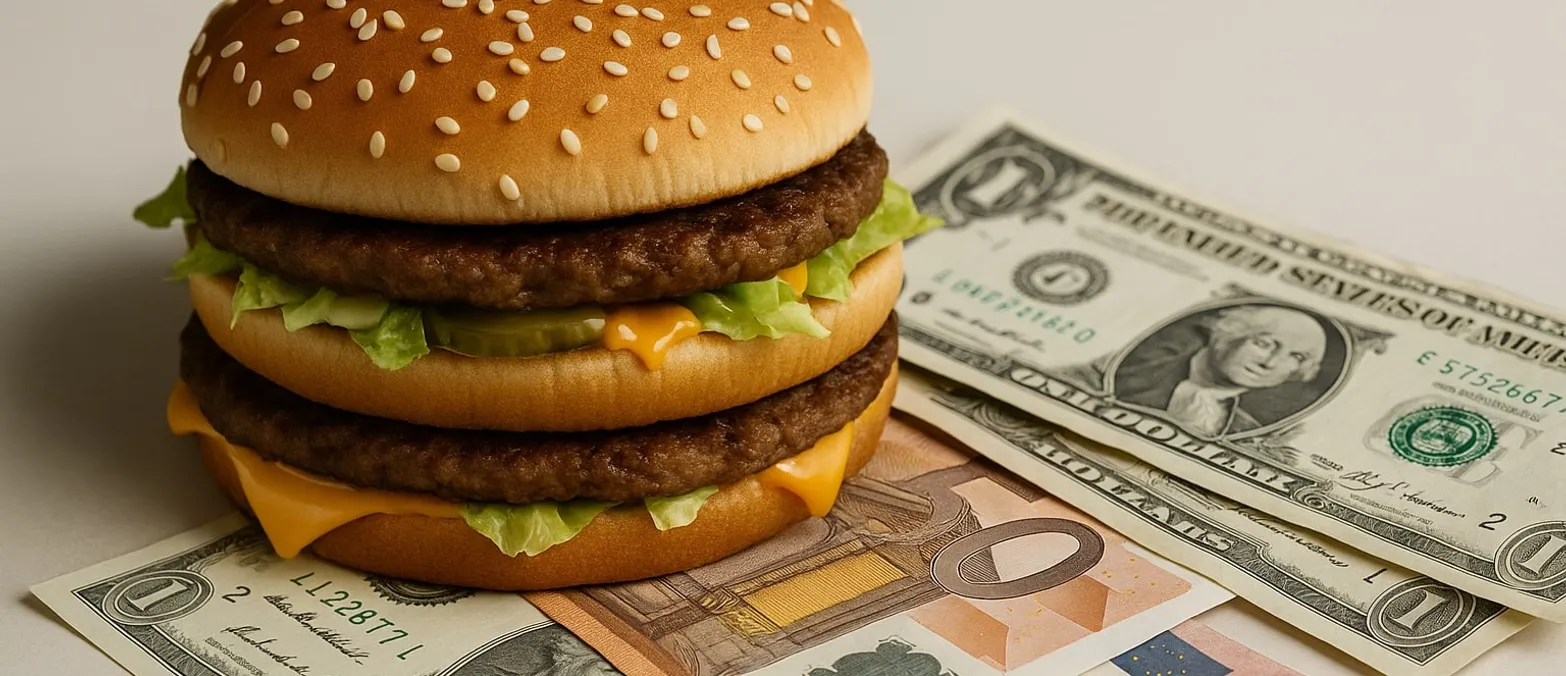
Big Mac Index: What a Burger Reveals About a Nation's Prosperity
The Big Mac Index: How a Humble Burger Became a Global Economic Indicator
Remember the days when a loaf of bread taught you life’s essentials on a children's show? Now, imagine a hamburger taking you on a journey through the complexities of the global financial world. Sounds unusual? That was exactly the innovative idea that The Economist introduced in 1986. Enter the Big Mac Index, a simple yet insightful tool that compares currency purchasing power worldwide using a universally loved fast-food staple: the Big Mac. All you need is a taste for burgers and a curiosity to understand how global currencies stack up against the U.S. dollar. Who knew a burger could spill so many economic secrets?
What is the Big Mac Index?
The Big Mac Index is a straightforward yet effective tool that leverages the price of a Big Mac, a staple in over 100 countries by a ubiquitous fast-food chain. Converted into U.S. dollars, the Index assesses whether a currency is "overvalued" or "undervalued" against the dollar.
Why Use the Big Mac Index?
This index is grounded in the concept of purchasing power parity (PPP). Ideally, in markets free from production cost discrepancies or tax differences, the price of a product should be uniform worldwide when converted into a single currency.
When the cost of a Big Mac in one nation vastly exceeds another after currency conversion, it may signal that the former country’s currency is overvalued. Conversely, a cheaper Big Mac suggests undervaluation. This principle helps the Big Mac Index gauge currency value and highlight deviations from their "fair" purchasing power.
It is crucial to note, however, that this index doesn’t measure a country’s wealth or living standards, as it focuses on a single product. While not a substitute for comprehensive analyses incorporating wages, productivity, or inflation, it offers a snapshot of currency valuation, aiding in areas like cost of living, travel plans, investment decisions, or trade analyses.
The Big Mac Index and Purchasing Power
Beyond currency comparison, the Big Mac Index offers a glimpse into real purchasing power: what can someone genuinely buy in a country with an average salary? This is where purchasing power shines.
Purchasing power captures how many goods or services a specific amount of money can acquire. It’s about income levels versus living expenses. A pricey Big Mac in relation to average wages could indicate higher living costs and lower purchasing power. Conversely, a cheaper burger could mean more bang for your buck.
This insight can be invaluable for travelers gauging how far their money will stretch abroad or investors assessing whether prices align or are inflated. It provides a creative lens for monitoring economic health and shifts in living standards.
Why a Hamburger?
Why settle on a Big Mac for this comparison? Consider these factors:
Consistency: The Big Mac boasts a standard recipe, remaining nearly identical worldwide. Other ubiquitous foods like rice or salad vary considerably regionally, while the Big Mac provides a stable benchmark—right down to its sauce and meat portions.
Popularity: Recognized and consumed globally, the Big Mac symbolizes fast-food culture. As an easily relatable product, it’s perfect for international price comparisons.
Representativeness: Reflecting typical fast-food menu costs, the Big Mac serves as a solid example for broader product pricing policies—unlike more culturally specific foods.
Brand Recognition: Available almost everywhere, McDonald’s fame makes the Big Mac an ideal anchor for international pricing comparisons.
Big Mac Prices: What’s Driving the Variations?
Big Mac prices fluctuate by country, influenced by multiple factors beyond exchange rates:
- Local Costs: Ingredients like beef and cheese could be pricier in Norway than in Mexico.
- Wages: Higher wages often trigger higher prices.
- Taxes and Regulations: VAT or food laws can impact pricing.
- Marketing Strategies: Positioned as a premium product in some countries, a budget option in others.
Calculating the Big Mac Index
The Economist converts Big Mac prices from local currencies to U.S. dollars, comparing them to U.S. prices. If a Big Mac is cheaper elsewhere, that currency is undervalued; costlier suggests overvaluation.
For example, if a Big Mac costs €5.79 in Germany and $5.79 in the U.S., and the exchange rate is 1 USD = 0.8692 EUR, the U.S. Big Mac would translate to €5.03. Here, a pricier German Big Mac indicates a potentially overvalued Euro compared to the dollar.
The Economist's official site features an interactive Big Mac Index chart, providing up-to-date currency valuations and purchasing power parity insights. Regular updates ensure clarity and breadth in currency comparisons.
Big Mac Index 2025: Current Rankings
According to The Economist, here are the countries with the highest Big Mac prices in 2025:
- Switzerland – $7.99
- Argentina – $6.95
- Uruguay – $6.91
- Norway – $6.67
- Eurozone – $5.95
- Costa Rica – $5.95
- USA – $5.79
- United Kingdom – $5.73
- Sweden – $5.67
- Denmark – $5.49
Source: The Economist, July 2025
Looking for more insights into indices?
Our guide to understanding indices unravels market evolution, aiding investors in making informed decisions.
The Big Mac Index offers a captivating, accessible view of purchasing power, bypassing complex formulas for a hamburger, an exchange rate, and a quest to see the world from a fresh perspective. So the next time you dig into a Big Mac, ponder: What does this burger reveal about this nation’s economy? It might just offer a savory taste of economic insight and investment opportunities!
Headlines

Consent was never given.
You need to first accept consent to see this content from TradingView.