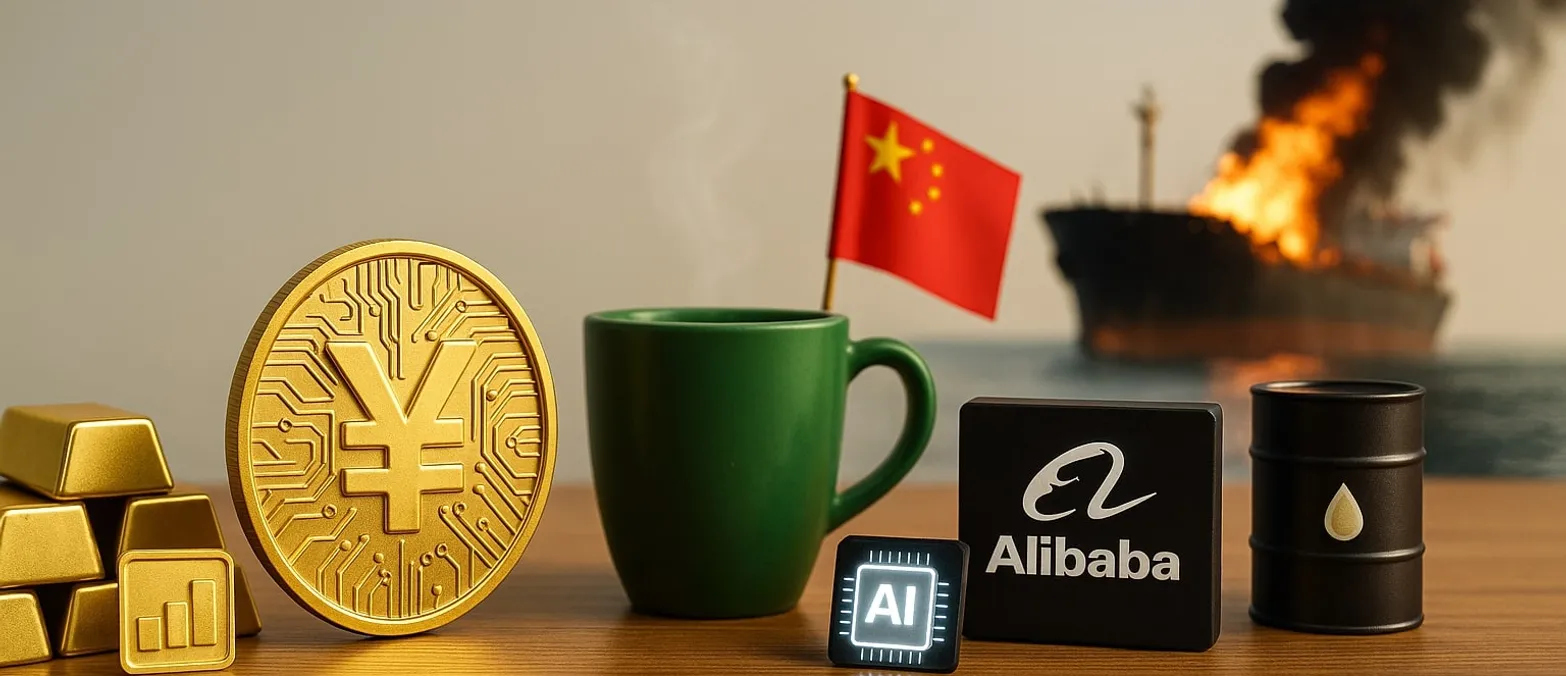
China and Commodities: Tech Giants Push for Yuan Stablecoin, Starbucks Sells China Business, Gold ETFs Surge
Chinese Tech Titans Push for Yuan-Stablecoin, Facing Skepticism Amid Financial Stability Concerns
In a strategic move to challenge U.S. dollar-dominated digital currencies, Chinese tech giants JD.com and Alibaba's Ant Group are urging the People's Bank of China to launch a stablecoin pegged to the yuan. These digital currencies, which facilitate quick cross-border transactions, are primarily anchored to stable assets like the U.S. dollar. While smaller projects tied to the Hong Kong dollar are underway, JD and Alibaba see a yuan-stablecoin as a crucial tool for asserting Chinese dominance in the digital payment sector. However, Chinese authorities tread cautiously, recognizing potential financial stability risks, even as they acknowledge the coin’s potential to bolster China’s global financial influence if political hurdles can be overcome.
Starbucks Considers a Multi-Billion Dollar Exit From Its China Venture
Starbucks is evaluating strategic options for its China operations, which could involve selling a stake to eager buyers, including Singapore’s sovereign wealth fund, GIC. With evaluations reaching up to $10 billion, these deliberations reflect Starbucks' struggle against aggressive local chains like Luckin Coffee, which have gained popularity with competitive pricing and tech-driven services. As the second-largest market after the U.S., China’s growing competition prompts Starbucks to consider unlocking capital to pivot and strengthen its competitive edge against new entities like Cotti Coffee, founded by ex-Luckin executives.
Alibaba Bets Big on Cloud and AI with $52 Billion Investment Overhaul
Alibaba is diving headfirst into cloud computing and artificial intelligence, announcing a $52 billion investment through 2026. The plan includes expanding data centers globally—in locations such as Mexico, Malaysia, and South Korea—and integrating AI more deeply into its offerings. This record-breaking tech investment focuses on driving growth in the cloud sector as traditional business lines reach maturity. However, analysts caution that these substantial expenditures may temporarily squeeze profit margins, even as Alibaba prepares to challenge U.S. titans like Amazon and Microsoft, seeking to reclaim its international market stature.
Gold ETFs Hit Peak Popularity Amid Political Turmoil
The first half of 2025 saw an extraordinary surge in Gold ETFs, marking the strongest inflows in five years with $38 billion added. Heightened geopolitical tensions, particularly surrounding former President Trump’s trade policies, have renewed gold’s appeal as a safe-haven asset. Driving these inflows, Asian funds—though constituting a mere 9% of global ETF assets—contributed a significant 28% of the new capital, illustrating a regional pivot towards gold amid unrest. This spike follows years of outflows pressured by high interest rates, highlighting the sensitivity of markets to political uncertainties.
Oil Markets on Edge Following Rote Sea Attacks
The oil market is grappling with escalating tensions as Houthi attacks target mercantile ships in the Red Sea, sending West Texas Intermediate crude prices to a two-week pinnacle. Already dealing with volatile transport costs, these incidents could provoke U.S. military retaliation and impact global oil supply. Amid this upheaval, Saudi Arabia unexpectedly increased their oil prices for Asian buyers, while OPEC+ signals greater-than-hoped-for production boosts starting in August. This mix of geopolitical risk and supply adjustments is fueling market anxiety, with potential ramifications for the global energy landscape, particularly as attacks in the region have intensified since the start of last year.
Author
Headlines

Consent was never given.
You need to first accept consent to see this content from TradingView.