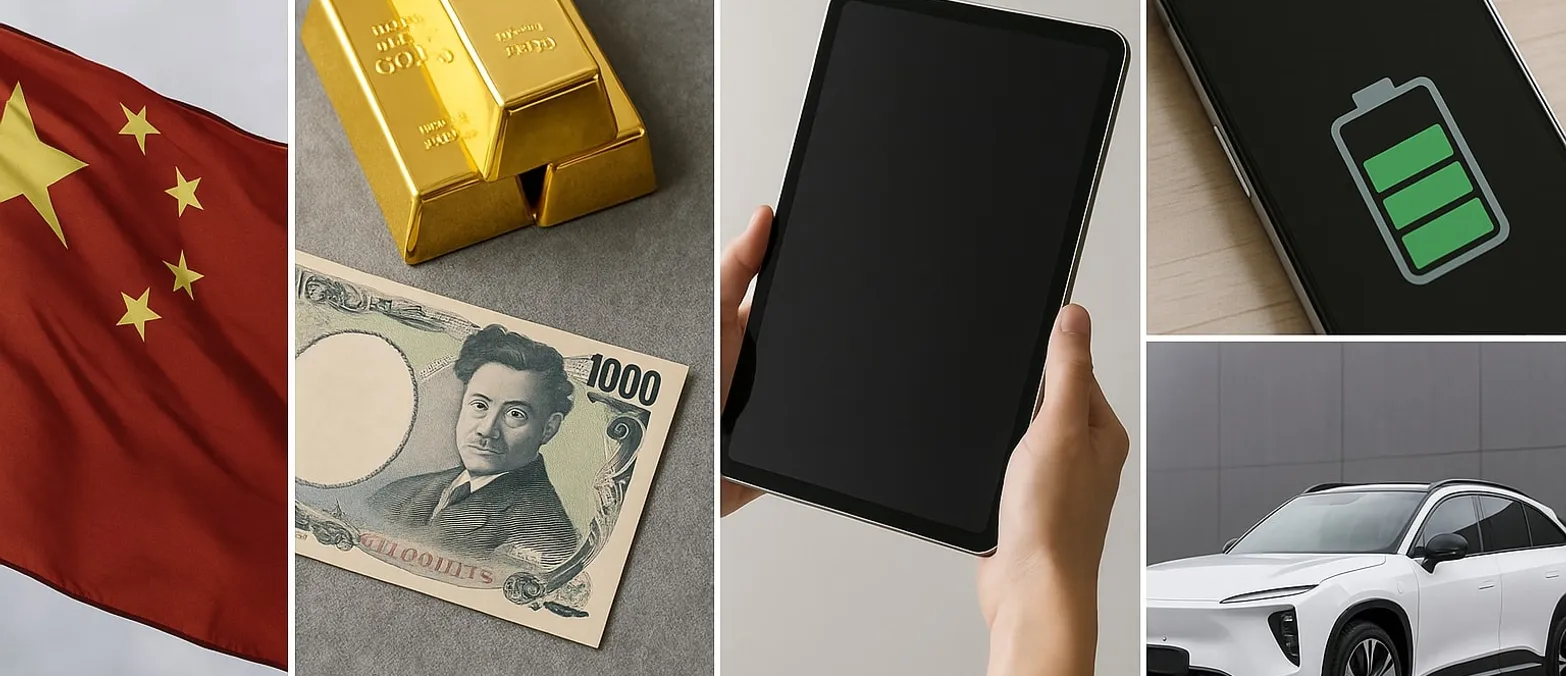
China/Commodities: Beijing Battles Deflation, BYD Faces Off Apple, and Nio Fights to Avoid Losses
China's Economy Stumbles Amid Deflation and Credit Crunch
In July, China's lending activity fell to levels not seen since December 2007, raising significant concerns about the health of its economy. The People's Bank of China (PBOC) reported banks issued new loans totaling only 49.9 billion yuan, far below the projected 300 billion yuan. Total financing also came in under expectations at 1.2 trillion yuan. This decrease can be attributed to weak domestic demand, ongoing deflationary issues, and seasonal caution among banks in hitting year-end targets. The slump in lending starkly highlights the pressure deflation is exerting on China's economy.
Deflation's Double-Edged Impact
Deflation, characterized by falling prices, can curb consumption and deter investment, two crucial drivers of economic growth. This trend is further exacerbated by the trade tensions initiated during the Trump administration, which force Chinese exporters to sell goods more cheaply. Despite official narratives touting robust economic growth, policymakers have been hesitant to roll out new stimulus measures. Analysts predict that significant monetary policy easing may not occur until the fourth quarter as authorities aim to shore up the economy.
Yen and Gold Rally on Interest Rate Speculations
The Japanese yen appreciated against all major currencies on Thursday following U.S. Treasury Secretary Scott Bessent's calls for interest rate adjustments by both the Federal Reserve and the Bank of Japan (BOJ). Bessent urged the Fed to slash interest rates by at least 1.5 percentage points and criticized the BOJ for its sluggish response to inflation. Concurrently, gold surged for the third consecutive day, nearing $3,400 per ounce, driven by declining bond yields and heightened speculation over a potential rate cut in September.
Bessent's remarks carry significant weight—lower U.S. rates typically weaken the dollar, strengthening the yen, while making gold, a non-yielding "safe investment," more attractive. In Japan, there's growing anticipation that the BOJ might adjust rates as early as October instead of waiting until December. Gold is further buoyed by geopolitical tensions and central bank purchases, contributing to dynamic shifts in currency and commodity markets, with clear winners emerging in the yen and gold.
BYD Ventures into Tablets: A Challenge to Apple?
Chinese electric vehicle manufacturer BYD has unveiled its first self-developed tablet, slated to debut in the new plug-in hybrid SUV, the Tai 7, under the premium sub-brand Fang Cheng Bao. This device integrates with the car's operating system, providing seamless connectivity between the vehicle's display and mobile devices. The Tai 7 will launch in China in the fourth quarter, while its sub-brand is expected to make its European debut under the name Denza later this year.
BYD's foray into connected in-car electronics represents another stride in a rapidly growing market. In China, competitors like Nio are introducing their own smartphones to foster customer loyalty, while electronics giants like Xiaomi and Huawei are venturing into the automotive industry. BYD could potentially become a competitor to Apple in the tablet market. Notably, BYD Electronics, the company's electronic arm, serves as a key supplier for Apple, assembling over 30% of the iPads for the California tech giant.
Xiaomi Unveils New Smartphone and Super-Battery
Xiaomi is poised to redefine battery standards in the smartphone arena with a device boasting a capacity between 8,500 and 9,000 mAh—almost double that of top models from Samsung and Google. This feat is made possible by a new silicon-carbon anode technology that stores more energy without increasing volume. Despite the XXL battery, the device's casing will remain merely 8.5 millimeters thick. Launch candidates such as the Xiaomi 16 and select Redmi devices stand to benefit from this technology.
Xiaomi sets a decisive tone in the race for longer battery life and higher performance capabilities. Silicon-carbon batteries offer greater energy density compared to conventional lithium-ion batteries with graphite anodes. In the long term, Xiaomi is also exploring solid-state batteries, which promise even higher energy storage and enhanced safety due to the absence of flammable liquid electrolytes. This technology could revolutionize not only smartphones but also electric vehicles like the Xiaomi SU7.
Can Nio's New SUV Revive Its Fortunes?
Chinese electric vehicle maker Nio has presented the third generation of its flagship SUV, the ES8, in an attempt to halt declining sales and revitalize its stock price. Sales have plummeted by about 20% compared to the previous year. The latest model, set to be showcased on August 21st in Chengdu, features a larger size, more space, and a 102-kWh battery enabling up to 635 kilometers of range. A test drive to Mount Everest aims to demonstrate its capabilities under extreme conditions.
This launch comes at a pivotal moment as Nio has recently lost significant market share in China, pressured by weak overall sales and a skeptical stock market. Targeted at the premium family vehicle segment, the new ES8 hopes to impress with technology, space, and range. Whether this will be enough to initiate the desired turnaround remains to be seen, but expectations from investors and customers are undoubtedly high.
That's it for our China news flash. Stay tuned for the next update, arriving as usual, next Thursday.
Headlines

Consent was never given.
You need to first accept consent to see this content from TradingView.