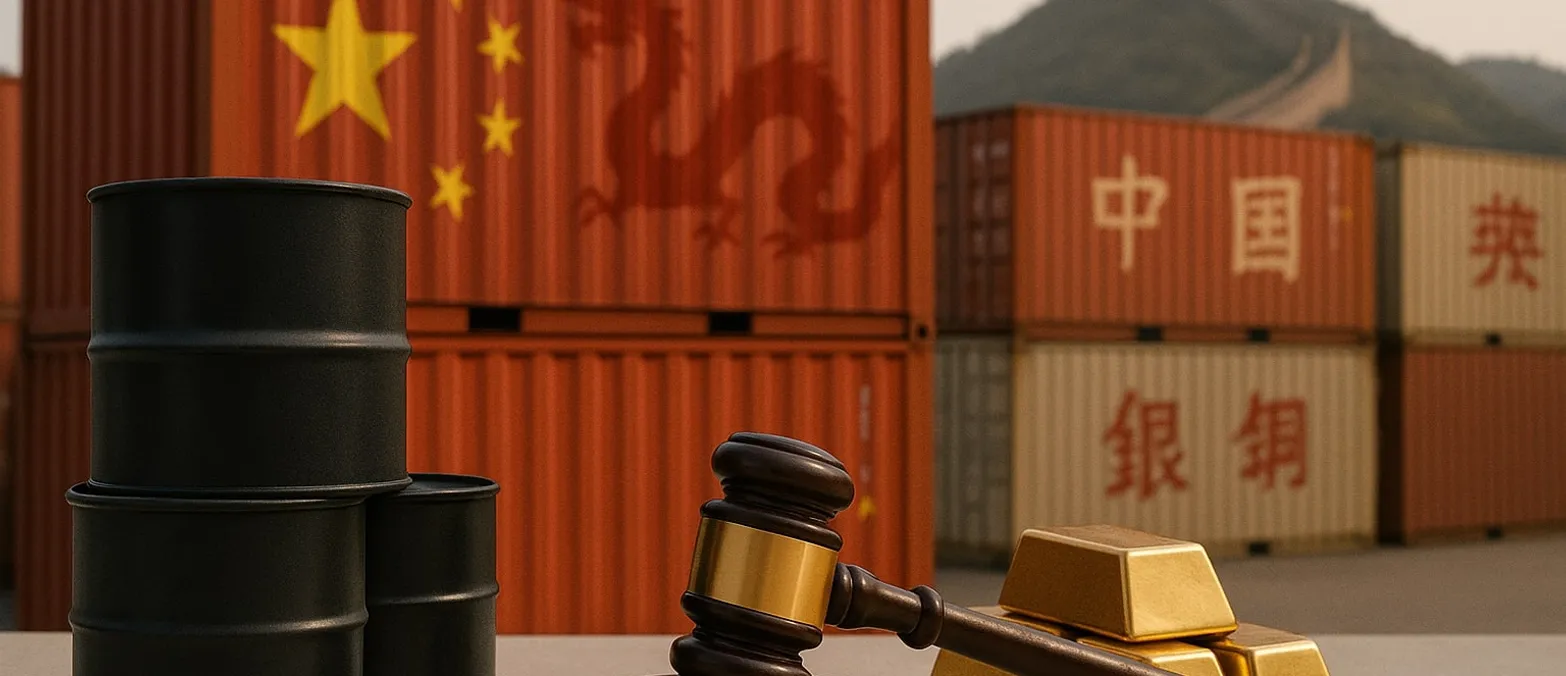
China/Commodities: China's Export Surge, Trump's Tariff Plans, Oil and Gold Rise
China's Surprising Export Surge Amid Trade Tensions
Despite ongoing trade tensions and a notable decline in exports to the United States, China has recorded a surprising 7.2% increase in exports this July, reaching an impressive $322 billion. This marks the strongest growth since April. While exports to the U.S. fell by 22% for the fourth consecutive time, China successfully compensated for this loss with increased shipments to Europe, Southeast Asia, Australia, and Africa, as per recent data from Chinese customs authorities.
China's Competitive Edge and Currency Dynamics
According to Jacqueline Rong, an economist at BNP Paribas, China's export resilience is largely due to its competitive pricing strategy and a weaker Yuan, which makes its exports cheaper. Additionally, many companies are redirecting their operations to third-party countries like Vietnam and Mexico to sidestep tariffs. Although China's foreign trade remains robust amidst new U.S. tariff uncertainties, analysts caution about potential declines in the latter half of the year.
Trump's Trade Strategy: An Extension or Added Tensions?
President Donald Trump has indicated that the U.S. is "very close to a deal" with China to extend the current trade truce that limits punitive tariffs and eases export restrictions. The current agreement was set to expire on August 12th. Trump considers meeting with China's President Xi Jinping only if it will help finalize an agreement. U.S. Treasury Secretary Scott Bessent noted that any decision on extension lies solely with Trump.
The trade skirmish between the U.S. and China has previously unsettled global markets. The tariff pause was intended to de-escalate tensions and pave the way for discussions on crucial topics such as export controls and curbing Fentanyl smuggling. Although there were positive signals from the recent meeting in Stockholm, Bloomberg reports that the deal's stability remains uncertain.
Potential New Tariffs: A Looming Threat
Despite the promising talks of a tariff pause extension, President Trump has hinted at the possibility of new tariffs on Chinese imports. Drawing a parallel to the recent 25% tariffs imposed on India, Trump rationalizes such actions due to ongoing Russian oil purchases by both India and China. While Trump did not provide specific details, he remarked that it "could happen," alluding to planned secondary sanctions against countries indirectly supporting Russia's war in Ukraine.
The U.S. is intensifying pressure on nations still importing Russian oil despite Western sanctions. India has already faced increased tariffs, and China might soon follow. These measures are part of a secondary sanction strategy targeting third-party countries engaging with sanctioned nations, as Washington aims to economically isolate Russia further.
Oil Prices Rise Amidst Geopolitical Uncertainty
As of Thursday, oil prices have climbed slightly, with Brent crude over $67 and U.S. oil around $65 per barrel. This increase is driven by significant inventory drawdowns and strong U.S. demand. Concurrently, rising geopolitical tensions over Russian oil exports pose uncertainties. President Trump announced new tariffs on Indian goods due to their continued import of Russian oil and threatened similar actions against China. Discussions with Russian President Putin are also reportedly on the agenda.
The U.S. aims to inhibit Russia's oil trade through proposed secondary sanctions, imposing penalties on countries that continue to source Russian oil despite Western bans. Meanwhile, decreasing U.S. oil inventories support the market; according to the EIA, stocks fell by three million barrels—more than analysts expected.
Gold Prices Navigate Between Trade and Rate Dynamics
Gold prices are exhibiting a sideways trend as investors take cues from U.S. interest rate policies and Trump's trade strategies. The new tariffs against China and India, key buyers of Russian oil, further fuel uncertainty about global economic conditions. Minneapolis Fed President Neel Kashkari has recently suggested that a rate cut may be on the horizon. Currently, the gold price is hovering close to $3400 per ounce.
Gold is often seen as a safe haven during uncertain times. Since the year's start, prices have surged by 29%, driven by geopolitical tensions, trade conflicts, and a declining trust in the U.S. dollar. Despite this, gold prices have stayed below the record high of over $3500 from April, as the market awaits new impulses. While interest rate cuts make gold more appealing compared to interest-bearing assets, increasing economic optimism due to lenient monetary policies might redirect investor focus to riskier ventures. Trade tariffs amplify global uncertainties, enhancing gold demand. The scenario remains complex.
Stay tuned for the next China and commodities report, scheduled for release next Thursday.
Author
Headlines

Consent was never given.
You need to first accept consent to see this content from TradingView.