Day of Ruination? How Trump's Tariffs Are Undermining Global Trade
It was 10:00 PM German time when Donald Trump dropped the bomb: Reciprocal tariffs against all trade partners of the USA. Twenty percent on European goods, more than fifty percent on Chinese products. Even uninhabited islands were explicitly subjected to increased import duties by the White House – and this was by no means a belated April Fool's joke. The shockwaves from the detonation in the Rose Garden of the White House quickly permeated the media landscape. The renowned economic magazine The Economist published a cover today showing Trump sawing apart the map of the USA. Instead of Trump’s slogan Liberation Day, the cover reads Ruination Day, which translates to Day of Destruction.
Reactions around the globe sounded similar. EU Commission President Ursula von der Leyen, for instance, referred to it as a “severe blow to the world economy.” China criticized that Trump is endangering global economic relations. The US financial markets opened deep in the red on Thursday, with the S&P500 losing about two trillion dollars in market capitalization overnight. Contrary to what was hoped, there is still no clarity regarding future tariff policies. Sharp reactions from the sanctioned countries are expected, and experts fear a recession. But what is Trump actually aiming for with these punitive tariffs? And how serious is the situation for Bitcoin and stocks?
Is Trump Successfully Blackmailing the World?
“Today we declare Liberation Day for the American economy.” With these words, US President Donald Trump began the announcement of comprehensive new tariffs in the Rose Garden of the White House yesterday. He described these measures, which he termed “revolutionary” in a lengthy speech, as aiming to improve the US trade balance and strengthen domestic industry. The logic behind Trump's radical measures can only be speculated about. Experts unanimously agree, however, that tariffs are not a suitable means to sustainably strengthen an economy.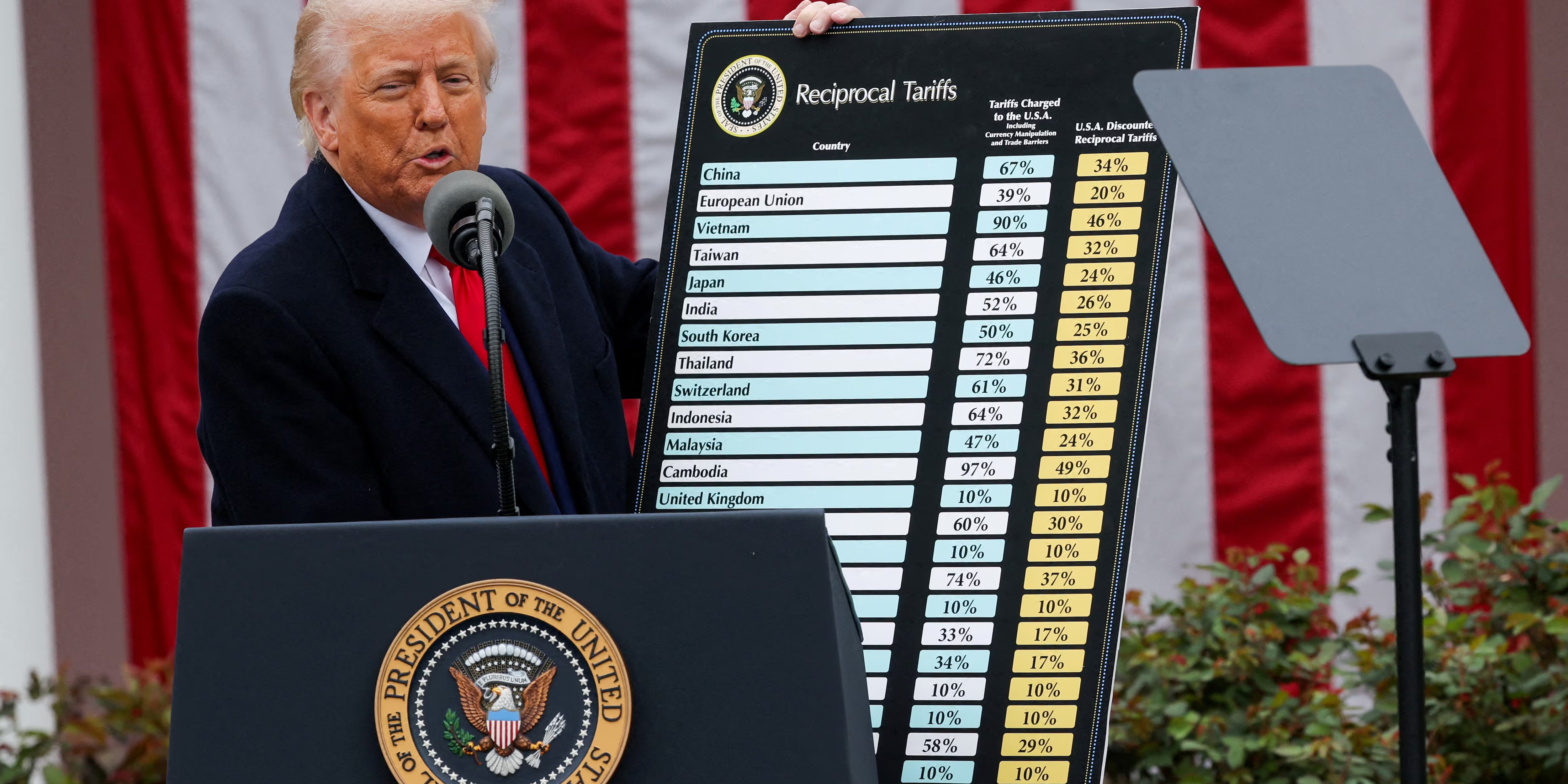 In the Rose Garden of the White House, Donald Trump presented the chart with reciprocal tariffs for all trade partners and promised the "liberation of the USA."
Trump does not seem particularly interested in this. He signed an executive order imposing a general ten percent tariff on all imports into the USA. Additionally, higher tariffs are levied on specific countries that, according to Trump, are the “worst offenders” regarding unfair trade practices. Imports from China face a 34 percent tariff and from the European Union, which Trump described as a “very tough negotiator,” are taxed at 20 percent. Notably, this is in addition to already existing punitive tariffs. In China’s case, import duties total more than 50 percent on all goods.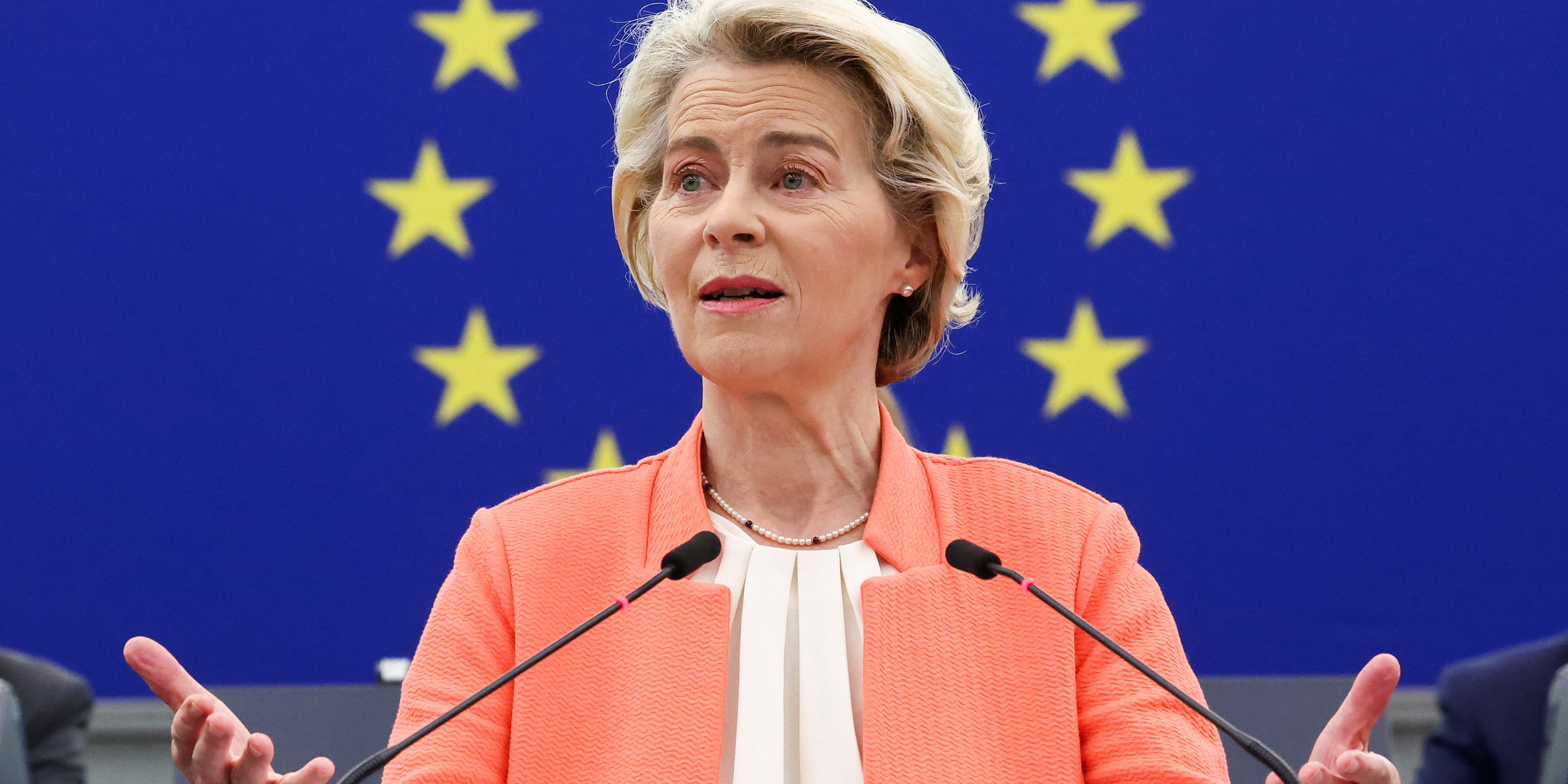 The EU, represented by Commission President Ursula von der Leyen, promptly responded: Trump endangers global trade and prosperity for people around the world.
These tariffs come into effect in stages: the general rate applies from April 5, while the increased rates for selected countries start on April 9. So there is still some time for negotiations. However, international partners find it quite unpalatable that Trump puts the economic gun so bluntly to their head. Canada, Mexico, and Israel have already signaled their willingness to reduce their own trade barriers if Trump also relents. The European Union and China are likely to react more strictly. According to von der Leyen, the EU plans immediate tariffs on American metal imports, with another comprehensive tariff package dependent on negotiations with Trump.
The Simple Calculations from the White House
China shows similar resolute behavior. Weeks ago, the political leadership in Beijing threatened that America could face a war if it wished, on an economic level and otherwise. So far, these threats have not prompted Trump to relent, quite the contrary. And in the future, Trump is likely to respond even more aggressively to economic affronts or counters from other countries. For, undoubtedly, the US President feels he is in the right. Given the injustice that the USA faces in international trade, he declared that the reciprocal tariffs were merciful.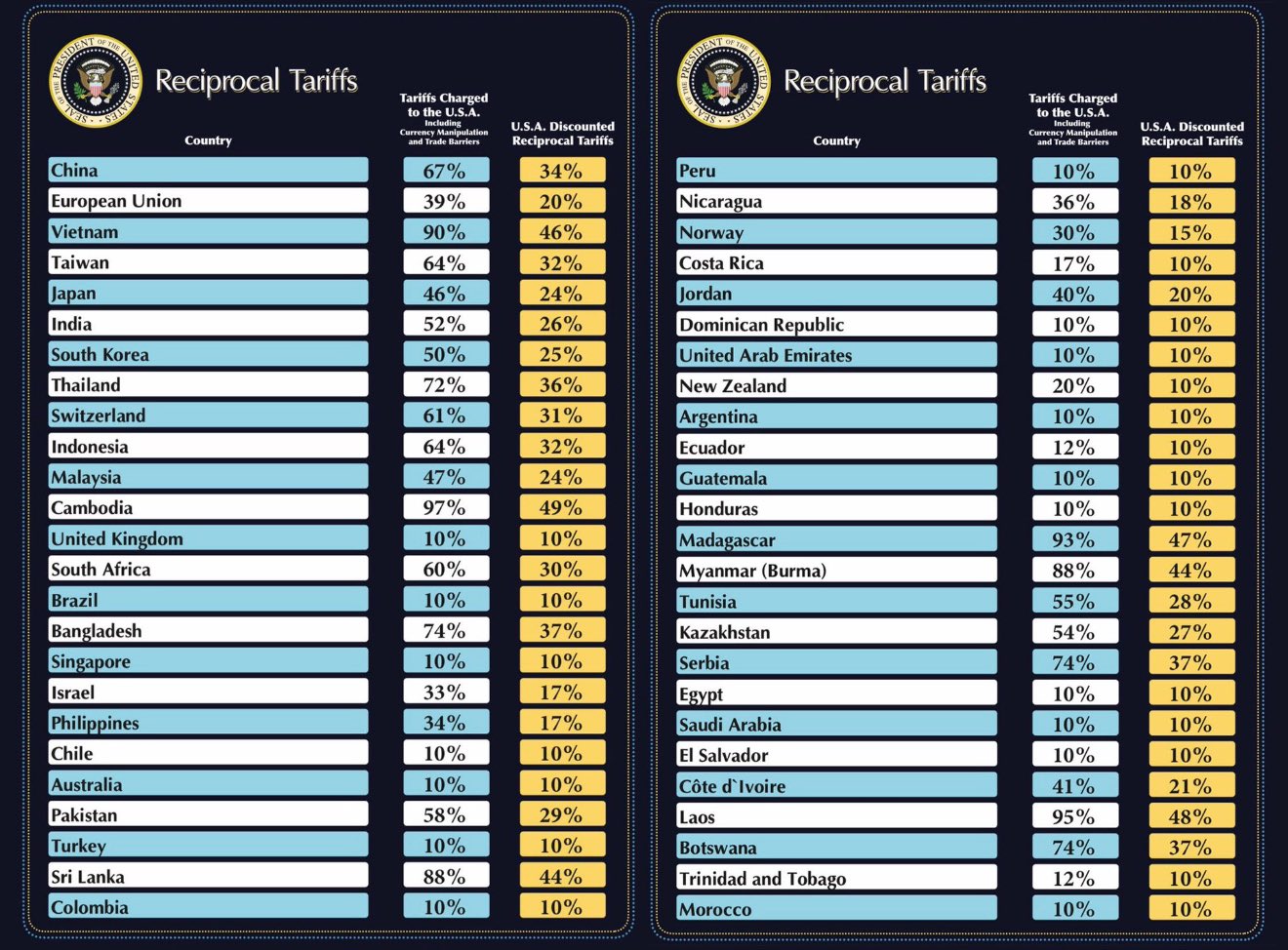 The tariffs in detail: The White House accuses the EU of trade barriers theoretically amounting to 39 percent, and for China, even 67 percent.
At the press conference in the White House, Trump held up a board listing various countries with their tariffs on US products. Besides, it were the new reciprocal US tariffs, which were about half in each case. For China, a tariff rate on US goods of 67 percent was found on the board, 39 percent for Europe, and 46 percent for Japan. Since general tariffs and trade barriers are difficult to quantify, heated discussions erupted in the media about how the White House even arrived at these figures.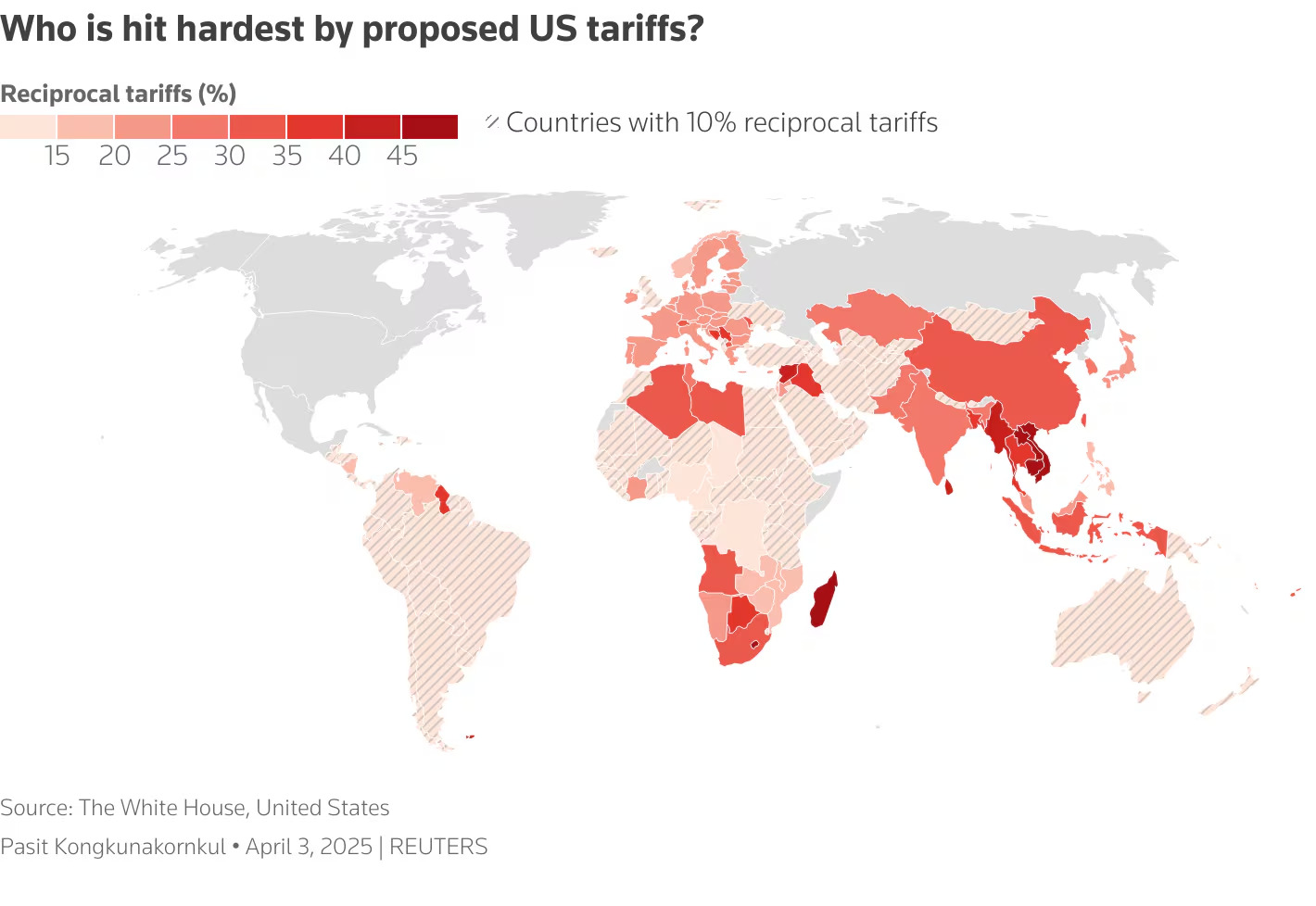 Trump's tariffs mainly target China, Southeast Asia, and Europe. Noticeably, Russia does not appear on this tariff list.
Gradually, it became apparent: The punitive tariffs are based on a dubious economic calculation. To estimate the supposed tariff level of a state for US products, Trump’s advisors simply used the respective trade deficit. In trade with China, for instance, the USA has a trade deficit of about 295 billion US-Dollar annually, which is about 67 percent of all US imports from China. Therefore, it was quickly decreed that China’s trade barriers were equivalent to an actual tariff of 67 percent.
Is Trump Crashing the Markets purposefully?
Simply put, the USA first compared its imports and exports for each country and then, where a deficit appeared (thus importing more than exporting), calculated this deficit as a percentage of total imports. Mathematically, this is arbitrary, and it has little to do with the actual trade barriers of the trading partner. Rather, it is a radical measure to reduce trade deficits – Donald Trump’s real plan. However, there are also some countries with which the USA has a positive trade balance, exporting more than importing. In these cases, Trump imposed a general tariff of ten percent.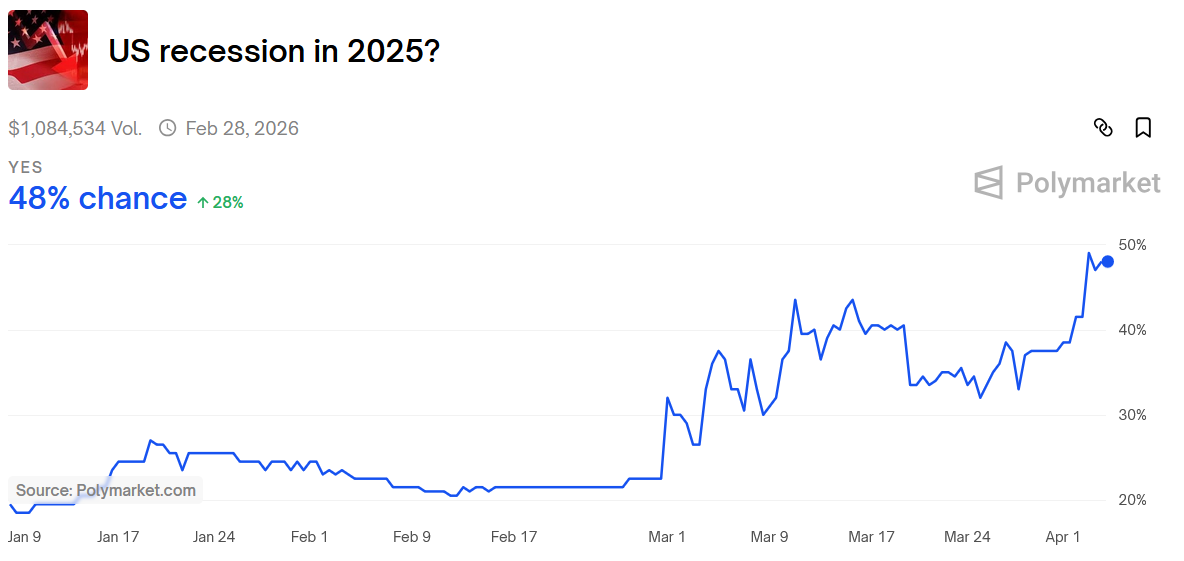 If Trump's goal was to pressure the markets, he has succeeded: The fear of a recession has reached its highest level this year, according to Polymarket.
Trump justifies these measures with the protection of national security and the need to reduce the US trade deficit. He invokes the International Emergency Economic Powers Act (IEEPA) of 1977, which empowers the President to implement economic measures in national emergencies. Trump declared: “We can no longer allow other countries to benefit from our generosity without treating us fairly.” Conversely, the arbitrary counter-tariffs from the White House are likely to be perceived as equally unfair abroad, setting the stage for a conflict.
This ongoing uncertainty is putting significant pressure on global financial markets – at least until initial agreements curb the threat of a global trade war. But that might suit Trump just fine – after all, it's been speculated for some time that Trump might deliberately crash the market to force an easing of monetary policy. The US still needs to refinance billions of dollars in debt this year. At the current interest rate level, that would be hardly affordable. Here, too, Trump expects the tariffs to help: He hopes for handsome additional revenues for the state treasury from the import taxes. If the economy goes along with it.
Headlines

Consent was never given.
You need to first accept consent to see this content from TradingView.