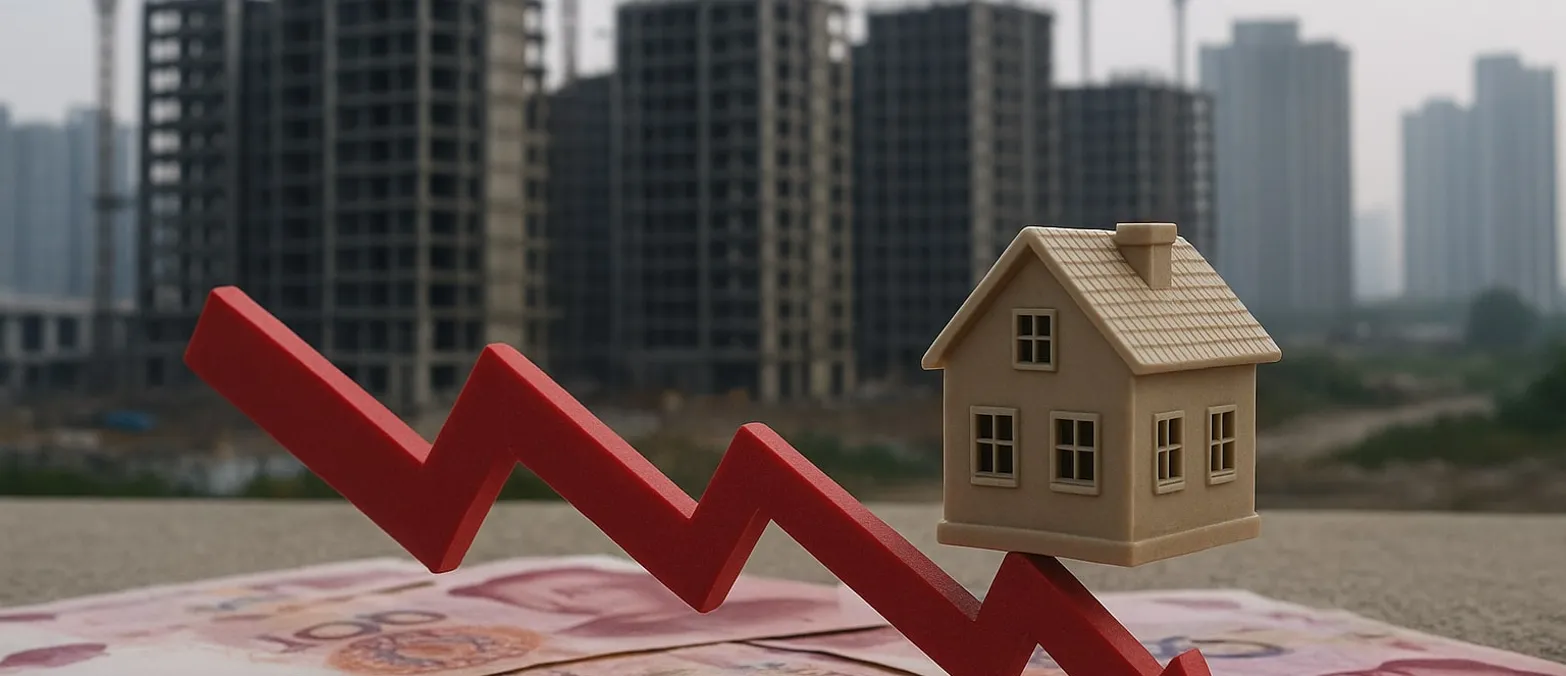
Escalating Real Estate Crisis: China's Plan to Combat GDP Weakness
China's Economic Slowdown: A Complex Puzzle of Real Estate Woes and Trade Frictions
China's economy is showing signs of fatigue, with growth slowing to 4.8% in the third quarter of 2025, compared to a year earlier. This marks a dip from 5.4% in the first quarter and 5.2% in the second quarter. While this growth rate keeps China on track to meet its government target of around 5%, underlying issues such as a deepening real estate crisis and sluggish consumer spending cast a shadow over the economy's momentum.
Real Estate Crisis and Consumer Caution Apply Economic Pressure
Chinese households are tightening their purse strings as property values shrink, shaking confidence in what is typically many families' largest asset. Compounding these challenges are trade tensions with the United States that dim the outlook for exports. As Washington threatens new tariffs, Beijing counters with stricter export controls on rare earths—a risky maneuver in an already tense environment. The situation mounts pressure on the Chinese government to inject additional economic stimulus to shore up the fragile economic confidence.
Housing Prices in Freefall: A Major Threat to Economic Stability
The real estate market, once the backbone of China's economic growth, is now in decline. New home prices fell by 0.4% in September compared to the previous month, marking the sharpest drop in nearly a year. Year-over-year, prices declined by 2.7%. Among 70 cities surveyed, 63 saw falling prices, with only slight increases in major cities like Beijing and Shanghai. Shenzhen reported its steepest price decline in over a year.
Analysts blame high inventory levels, job security concerns, and stagnant income growth for keeping potential buyers on the sidelines. Goldman Sachs notes that smaller cities bear the brunt of massive overcapacity, and existing measures to ease the market’s woes have shown little impact. Despite government efforts to stabilize the market with targeted interventions, the lingering effects of a liquidity crisis since 2020 continue to undermine buyer confidence.
Political Control Eclipses Economic Relief Opportunities
The release of weaker GDP numbers coincides with the plenum of the Communist Party’s Central Committee in Beijing, where upcoming five-year economic strategies are being debated. Observers anticipate that China's leadership will likely continue its playbook of state-directed investment and a pivot towards technological independence—a strategy already yielding successes in sectors such as electric vehicles and renewable energy.
This approach, however, diverts resources towards strategic industries, while leaving average consumers and the middle market on the back burner. An undercurrent of deflation is emerging, driven by falling prices and weakened demand. President Xi Jinping faces a critical message: China must strike a balance between growth and stability. The autumn of 2025 marks a delicate pivot point for Beijing at the crossroads between achieving technological supremacy and navigating a teetering economy.
FAQs
What is the current economic situation in China?
China's economy is growing at a slower pace. In the third quarter of 2025, GDP growth was about 4.8% year-over-year, less than the growth observed in the previous quarters. Consumer spending remains tepid, housing prices are falling, and businesses are investing cautiously. The economy is in a cooling-off phase, though not a recession.
Why is China’s economy currently facing challenges?
The persistent real estate crisis is a primary factor. With declining property values, consumer trust is eroding, leading to reduced spending. Many construction firms are heavily indebted, compounded by weaker exports, trade conflicts with the U.S., and an aging population. These factors slow growth and create uncertainty for investors and consumers.
What’s happening with China’s economic strategy?
China is moving away from its former growth model. Historically fueled by massive construction activities and exports, the country is now shifting focus towards technology and domestic consumption. However, this transition is bumpy, prompting hesitation from both companies and consumers, prompting government intervention with new economic measures.
Is China heavily indebted?
Yes, China’s total debt is substantial, estimated to exceed three times its annual economic output. This burden is shared by the government, real estate companies, and local administrations, limiting the government’s ability to sustain the economy over the long term.
Author
Headlines

Consent was never given.
You need to first accept consent to see this content from TradingView.