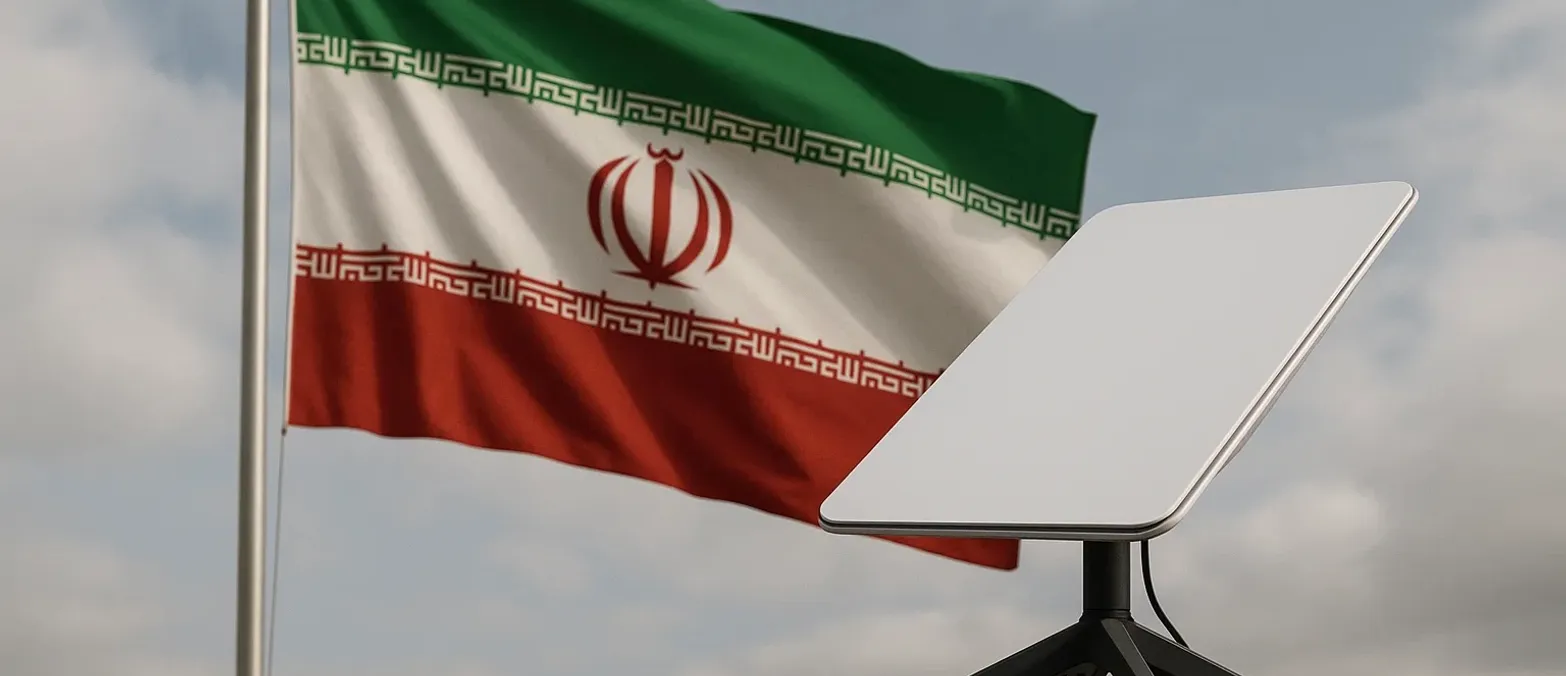
Iran Bans Starlink: Severe Penalties Loom
Iran’s Cosmic Clampdown: A Starlink Showdown with Stratospheric Stakes
The Iranian Parliament has decided to take a hardline stance against Elon Musk's celestial creation, Starlink—threatening users of the satellite internet service with severe penalties, including hefty fines, lashing, and up to two years behind bars. This move is likely to send shockwaves through a populace craving connectivity in a country that’s no stranger to pulling the plug on conventional internet access.
Amidst the backdrop of recent conflict with Israel and Iran's notorious internet blackouts, Starlink represents one of the last bastions of online freedom for Iranians seeking a lifeline to the world beyond their firewalls. Starlink's high-speed connections beam down from a constellation of satellites, courtesy of Musk's ambitious space venture, SpaceX. Though exact user numbers remain as shadowy as the service’s presence, one thing is clear: costs stretch thinner than the pockets of the average Iranian family.
The Politico-Punitive Paradigm Shift
It’s not just Starlink feeling the governmental heat; Iran’s lawmakers have also cranked up the penalties for so-called espionage activities, with whispers about an enigmatic “operative cooperation” that might soon be met with capital punishment. Predictably, observers suspect these heavy-handed measures are engineered to stifle dissent and silence critics. While these legislative dictates now await the formal nod from the Guardians Council, approval is as predictable as a sunbeam in the desert.
Starlink began its clandestine journey into Iranian airspace back in October 2022, a period marked by widespread unrest following the tragic death of Mahsa Amini—a young woman who died in police custody after running afoul of the morals police for her alleged transgression against the headscarf mandate. It was a period when the government shackled the internet in hopes of quelling the public outcry.
Starlink: A Beacon Against Censorship
During the recent twelve-day conflict with Israel, Starlink proved its worth as a digital defiance tool—deploying a satellite shield against state censorship and keeping the line open to the outer world. Though legal on paper, the Starlink modules fetch nearly €2,000—a princely sum far exceeding the shelf price, filtering unseen across the Iranian borders through backyard bazaar channels and alleged routes from neighboring Iraq.
With the Iranian Parliament gunning for a full-court press on Starlink, this measure might not only illuminate the lengths the authorities will go to to maintain their vice-like grip on information. It serves as a glaring acknowledgment of the rising tide of satellite-based insurgency as the populace maneuvers around the iron fist of state control.
Future Glimpses into Iran’s Connectivity Struggle
As the Guardians Council’s stamp of approval likely looms, Starlink’s presence—or rather, absence—in Iran might well become a certainty. This legislative hammer may soon bear down, tightening the digital noose and leaving Iranians searching for new loci of connectivity. As the world watches, cloaked in concern over human rights and freedom of information, the unfolding drama in Tehran tells a tale of cosmic importance—a clash not of titans, but of technologies, rights, and repression.
Author
Headlines

Consent was never given.
You need to first accept consent to see this content from TradingView.