Crisis without End? VW, Tesla, and Trump's Tariffs
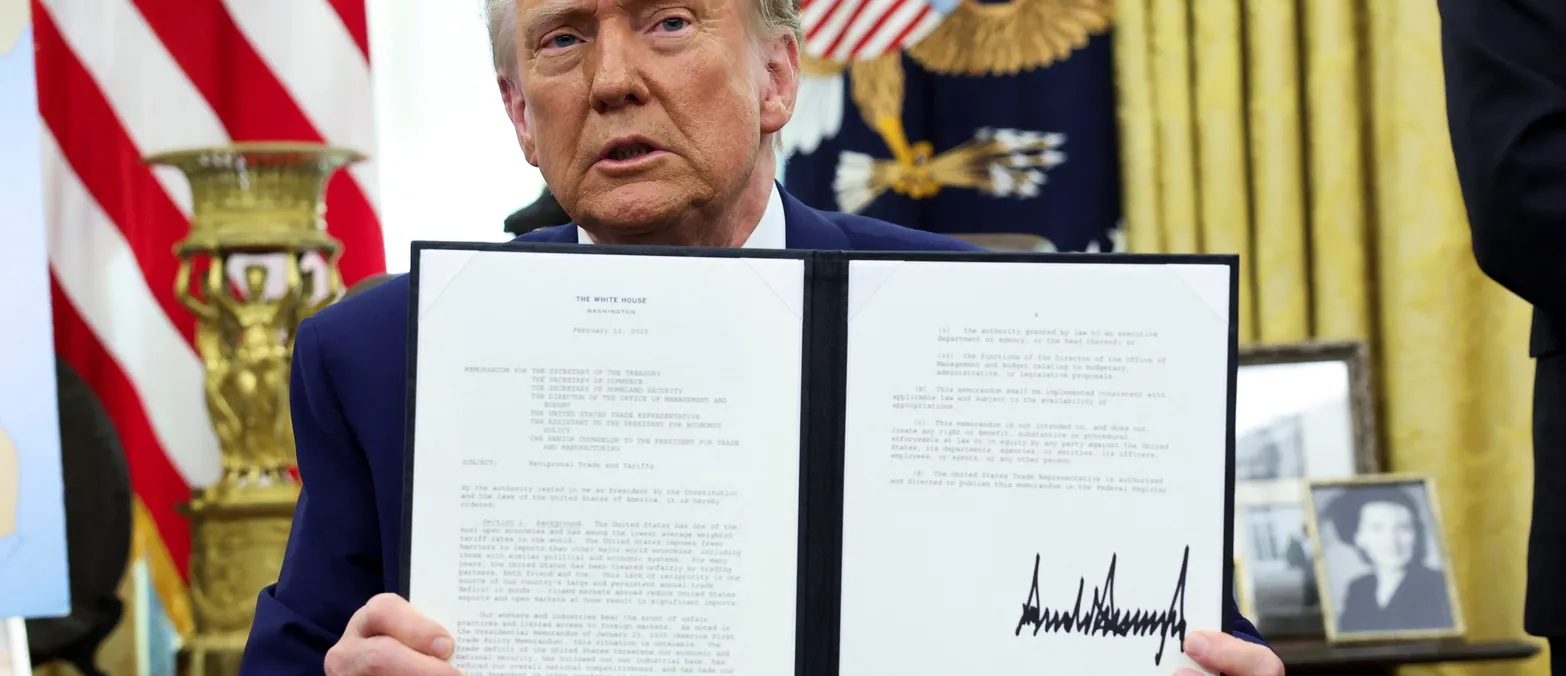
"The European Union was only created to cheat the United States," Trump sneered just a few weeks ago at the then-most important Western ally. The trade deficit with the EU particularly bothers the new U.S. head of state. Furthermore, according to Trump, it displeases him that American companies relocate their production abroad and import finished goods cheaply. To kill two birds with one stone, Trump imposed new tariffs against the European Union yesterday and increased existing import duties tenfold. Critics warn of a lasting weakening of the U.S. economy, from which China could benefit in the long term.
EU tariffs increased tenfold — why?
Trump's calculation behind his aggressive tariff policy is obvious: It should become unattractive for foreign producers to deliver their products to the USA. Trump wants to use the tariffs to dissuade domestic manufacturers from relocating their production abroad. Many U.S. automakers produce in Mexico or China because wage levels, raw material costs, and regulatory hurdles are lower there. Partly for this reason, Trump imposed high tariffs against these two countries early February.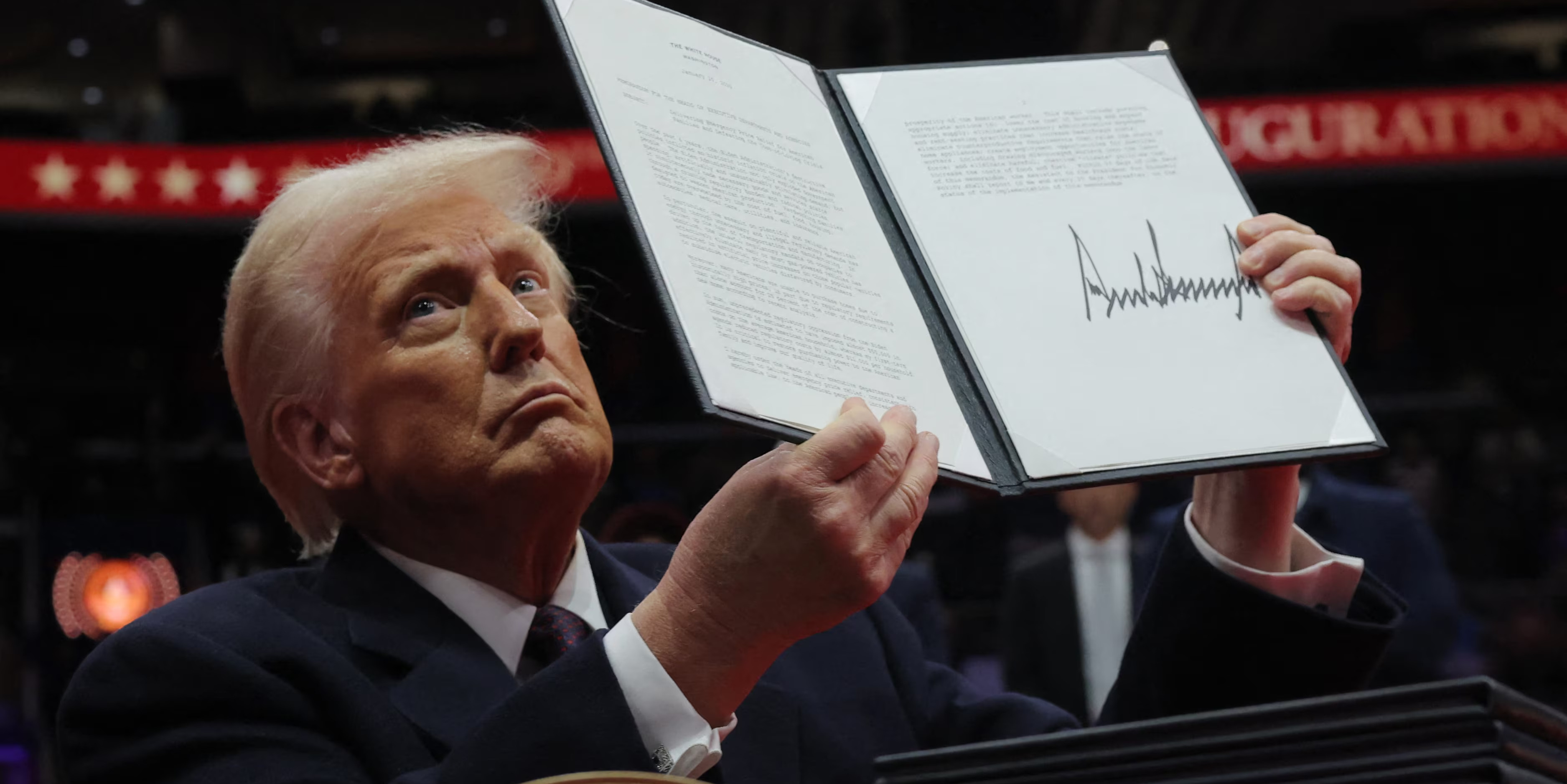 By executive order, Donald Trump increased tariffs on European cars from 2.5 to 25 percent. The industry is very concerned.
Trump fears the ongoing relocation of production capacities abroad could lead to a long-term weakening of the domestic industry. He is also bothered by the negative trade balances that the United States has built with its most important partners for years. For example, the European Union: last year, the United States bought goods worth about 584 billion dollars from EU countries. Conversely, the USA sold only goods worth around 357 billion dollars to the European Union.
In summary, the USA incurs a trade deficit of well over 200 billion dollars. The USA spent approximately 227 billion dollars more in trade with the EU than it received. The situation is similar in the relationship with Canada: in 2024, the USA exported goods worth nearly 350 billion dollars to its northern neighbor; in the opposite direction, approximately 412 billion dollars flowed. Here too, the balance for the United States was negative.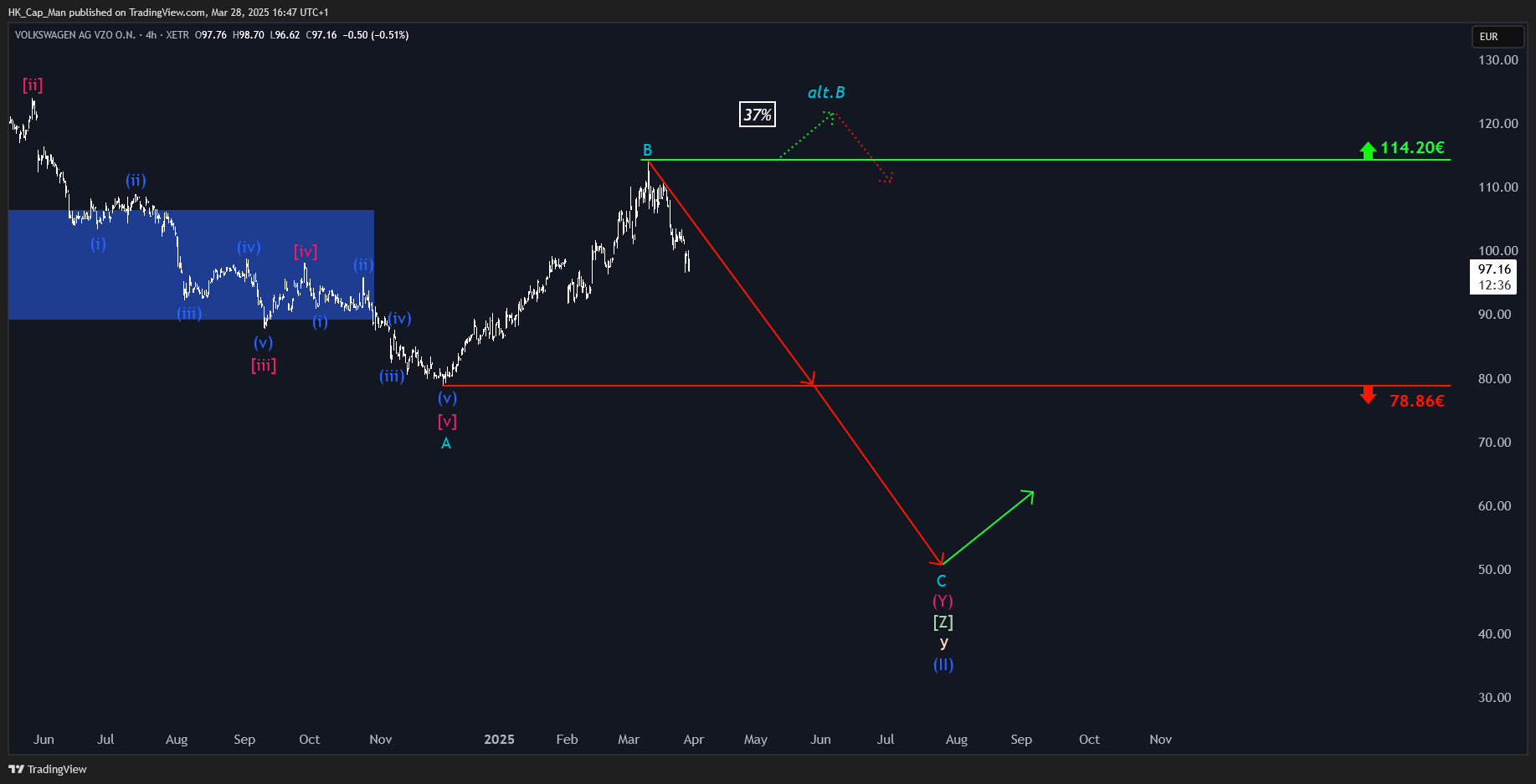 The German car market leader Volkswagen is in a corrective movement after the top of the turquoise wave B, which should go significantly further down.
If a country imports more than it exports in the long term, it becomes dependent on foreign producers, while the domestic industry gradually declines. Trump particularly fears creeping decay in the automotive industry, whose exports have significantly decreased over the past ten years. In 2015, U.S. companies delivered between 90,000 and 130,000 cars abroad each month; last December, it was only about 64,000, in November just under 70,000, and in October just over 55,000.
With the tariffs against major suppliers in Europe and China, Trump now wants to ensure that domestic producers return to the USA to avoid the tariffs and for foreign vehicles to become unattractively expensive for consumers. Trump also emphasized when signing the executive order, sealing the new tariffs against the European Union, that domestic automakers would naturally be exempt—provided they produce in the USA. Previously, tariffs on European cars were at 2.5 percent; now, they are a hefty 25 percent.
Are the USA hurting itself the most?
The new 25 percent tariffs on imported cars from Europe will take effect in the first week of April. Affected are passenger cars and light utility vehicles not produced in the United States. By early May at the latest, equally high tariffs on car parts such as engines, transmissions, or electrical components are to take effect.
Trump also hopes the tariffs will lead to increased government revenue to finance tax cuts. However, experts suggest that this calculation only partly holds for the end consumer. Despite Trump and his Secretary of Commerce Scott Bessent repeatedly emphasizing that the tariffs would not lead to an increase in inflation, price increases are unavoidable. Several major European car manufacturers have already announced they will have to pass on additional costs due to new tariffs, at least partly to their customers.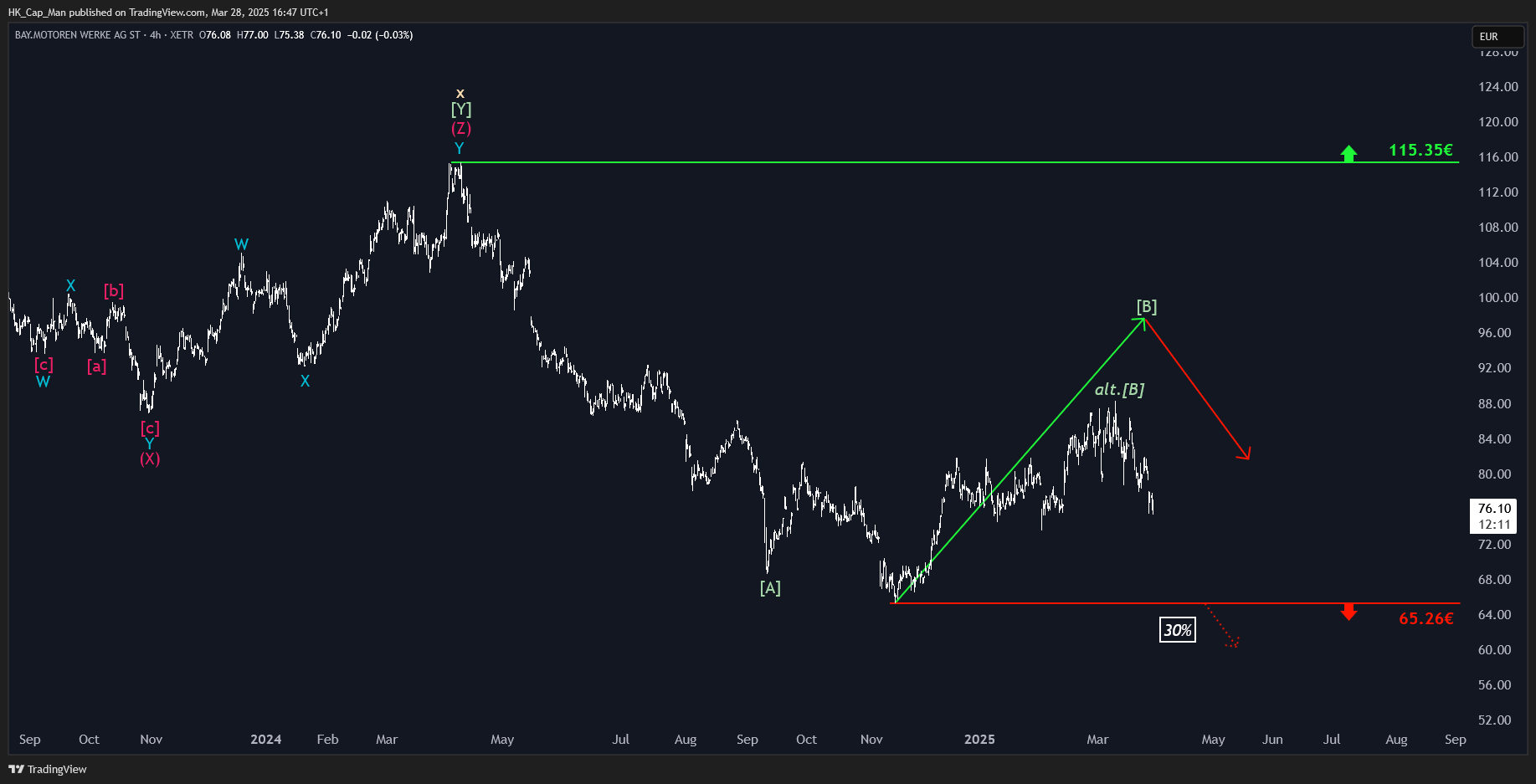 BMW has also significantly pulled back in recent days. A direct sell-off below the support at 65.26€ is 30% likely.
This could lead to widespread price increases, as foreign cars are not an insignificant factor in the US industry: about half of all cars sold in the USA last year were imported from abroad. Major trading partners included Mexico, Canada, and Germany. Germany is the largest supplier from the EU, with car exports totaling 34 billion dollars to the United States. A total of 13.1 percent of all passenger cars and light vehicles imported by the USA came from German companies, according to the Federal Statistical Office.
Although major German automakers already have production facilities in the United States, the share of these plants in total American sales is small. According to the analysis platform Global Data, 81 percent of all Volkswagen models sold in the USA were recently imported. For Mercedes Benz and BMW, it is nearly two-thirds each. Thus, not only will foreign cars become more expensive in the USA, but the U.S. industry is also likely to suffer. The automotive service provider Cox Automotive expects a production decline of about 30 percent or 20,000 vehicles per day by mid-April, according to Tagesschau.
Trump didn't ask Musk
According to Trump, the tariffs would impact Tesla "neutrally" to "positively" because "anyone with factories in the United States will, in my opinion, be well-positioned." And as is well known, Elon Musk maintains tax-advantaged plants in Texas and California. Musk himself did not advise him on the tariff decision, Trump emphasized. A little later, the U.S. president backtracked and admitted on his social media channels that the tariffs also affect "prices of parts for Tesla cars that come from other countries." The cost impacts are "not insignificant."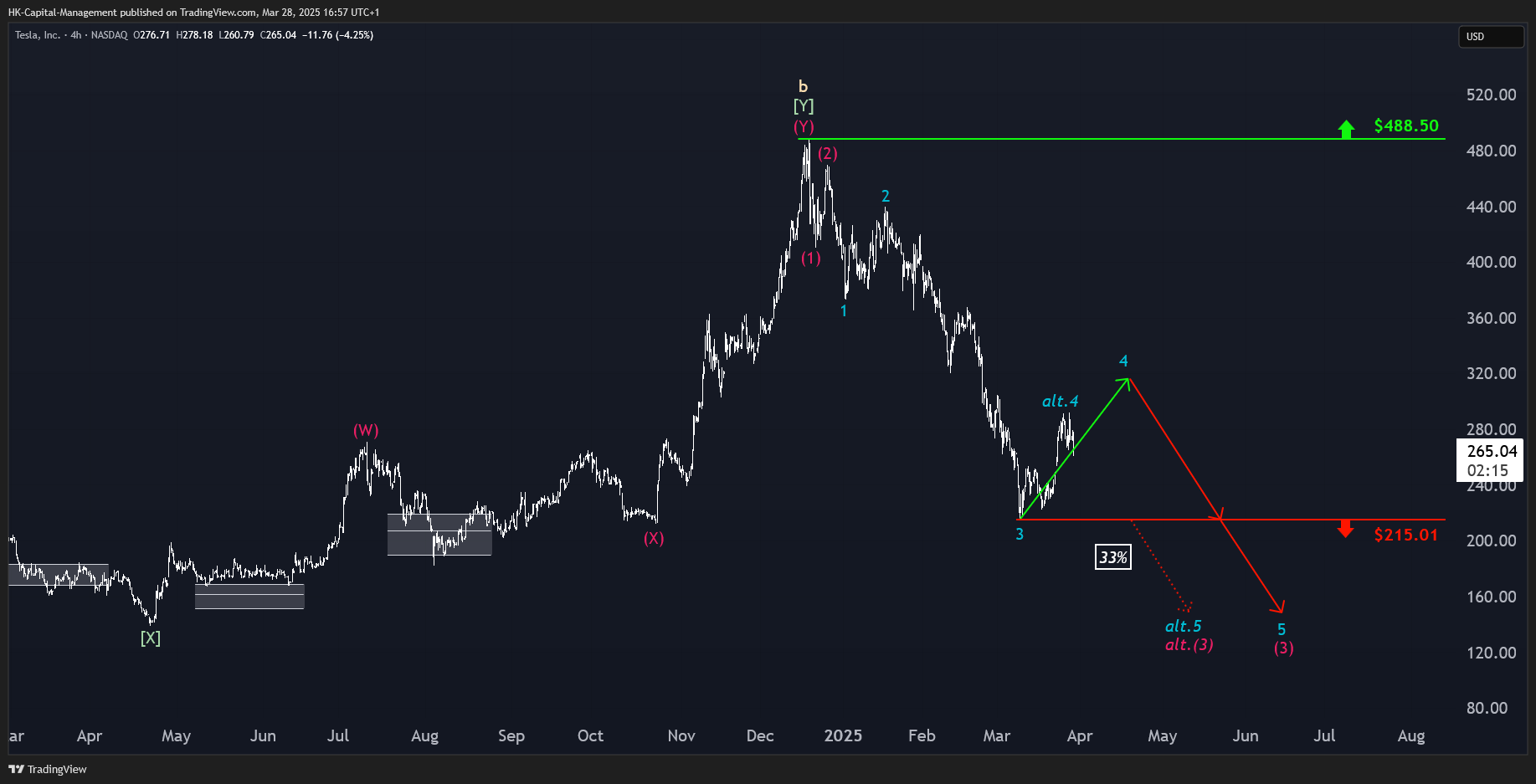 Tesla is showing increasing weakness and should soon fall below $215.01. Subscribers receive concrete target zones.
The overall German and European economy should be only slightly affected by Trump's tariffs, according to experts. The consequences are much more severe for the industry itself and the regional economy. Accordingly, the still-acting German government is taking a combative stance. For example, the outgoing Minister of Economics, Robert Habeck, said, "It is now crucial that the EU responds decisively to the tariffs—it must be clear that we will not bow to the USA." Now "strength and self-confidence are needed."
EU Commission President Ursula von der Leyen also announced she intended to defend the "economic interests" of the European family of nations. As a first measure, the EU plans to reintroduce the currently suspended tariffs on US products like jeans, whiskey, and motorcycles in mid-April. Canada also announced renewed sanctions. Trump does not seem indifferent to all this. Just a few hours ago, he threatened further tariffs if the EU and Canada join forces against the USA in the tariff dispute.
Headlines

Consent was never given.
You need to first accept consent to see this content from TradingView.