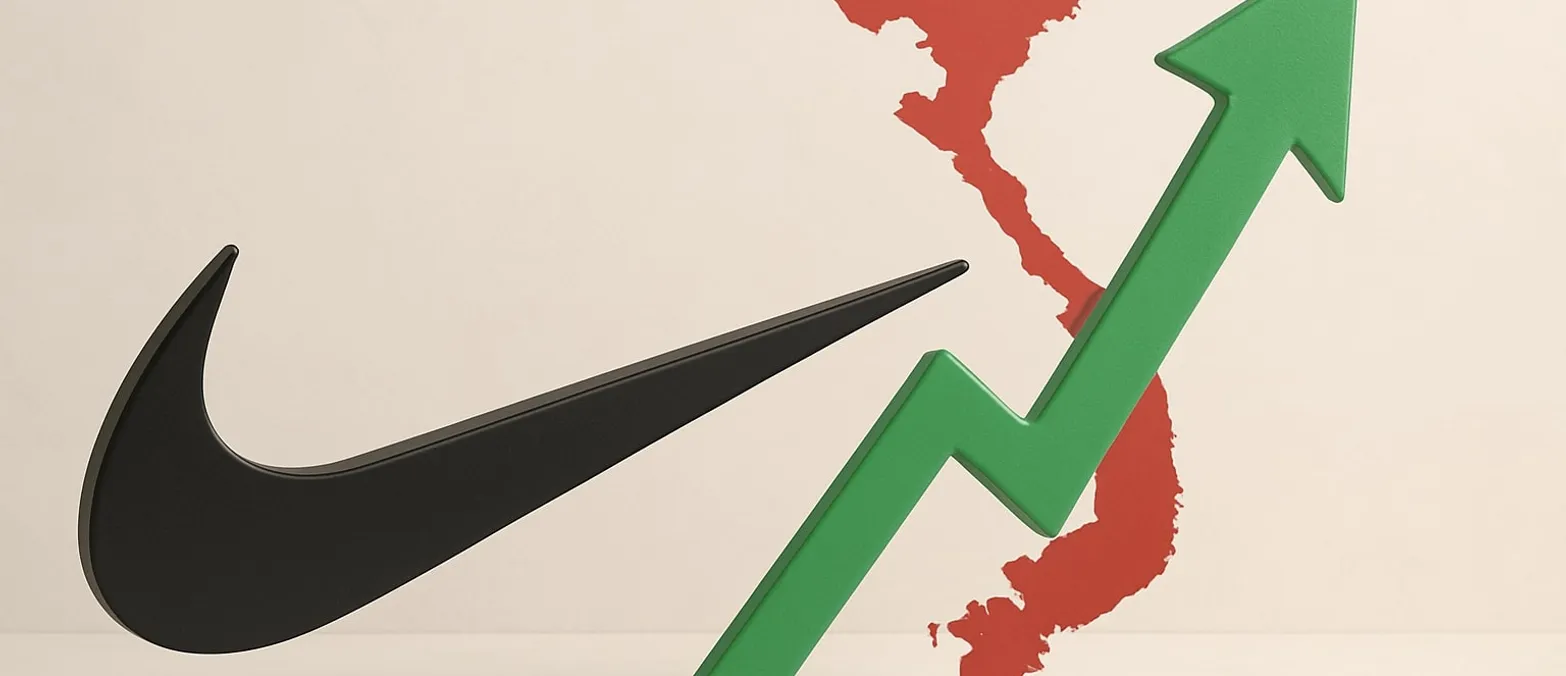
Nike Stock Rises Following Trump’s Trade Agreement with Vietnam
The New US-Vietnam Trade Deal: A Mixed Blessing for Markets
In a surprising turn of events, the United States has struck a trade agreement with Vietnam that lowers expected tariffs and sends ripples through global markets. The implications could be far-reaching, especially for American apparel brands and their investors.
Potential Windfall for American Apparel Giants
After months of intense negotiations, former President Donald Trump announced a trade deal with Vietnam that fixes import tariffs at 20% on goods from the Southeast Asian nation—significantly less than the previously anticipated 46%. This news sent shares of Nike, Under Armour, and Levi Strauss surging upward. Although many products, especially athletic footwear, were already subjected to a 20% tariff, the mere certainty of avoiding higher duties offered a sigh of relief for affected companies.
Stocks on the Rise
Nike investors enjoyed a 4% bump in stock prices following the announcement, with Under Armour and Levi Strauss seeing similar boosts. Analyst David Swartz from Morningstar Research suggested that investors interpret this change as a positive signal for the future. However, the new deal confirms existing tariff levels rather than introducing lower ones for these product categories.
A contentious component of the deal is a newly introduced 40% tariff on so-called "transshipments"—goods entering Vietnam via third countries like China before reaching the U.S. This particular clause opens potential friction points with China, adding complexity to already tense trade dynamics between Washington and Beijing.
Asian Reactions and Economic Perspectives
The deal represents a significant milestone as Vietnam becomes the first major Asian country to come to a trade agreement with the U.S. amidst mounting global tensions. The pact also includes provisions for the U.S. to access Vietnamese markets duty-free, a victory that Trump lauded. The sentiment in Asia, however, is mixed. While the agreement offers some relief, it raises questions about how transshipments will be regulated and taxed.
For German companies operating in Vietnam, the settled 20% tariff is a less daunting prospect compared to the feared 46%. According to the Chamber of Commerce in Ho Chi Minh City, the deal is the most favorable outcome under challenging circumstances. Nevertheless, uncertainties linger, particularly concerning the intricate definition and classification of transshipment goods.
Future Trade Trajectories
In the coming week, U.S. officials are expected to provide further clarity on the rules governing transshipments. These guidelines could substantially impact supply chains, especially for Chinese exports using Vietnam as a gateway to the U.S. market. The subsequent developments will be closely watched by companies and analysts, as they could significantly influence the future trade relationship between the U.S., China, and Vietnam.
As things stand, the agreement can be seen as an uneasy respite—a temporary calm in the stormy waters of international trade. How the situation unfolds will depend on diplomatic finesse and the strategic maneuvering of global economic powers.
Author
Headlines

Consent was never given.
You need to first accept consent to see this content from TradingView.