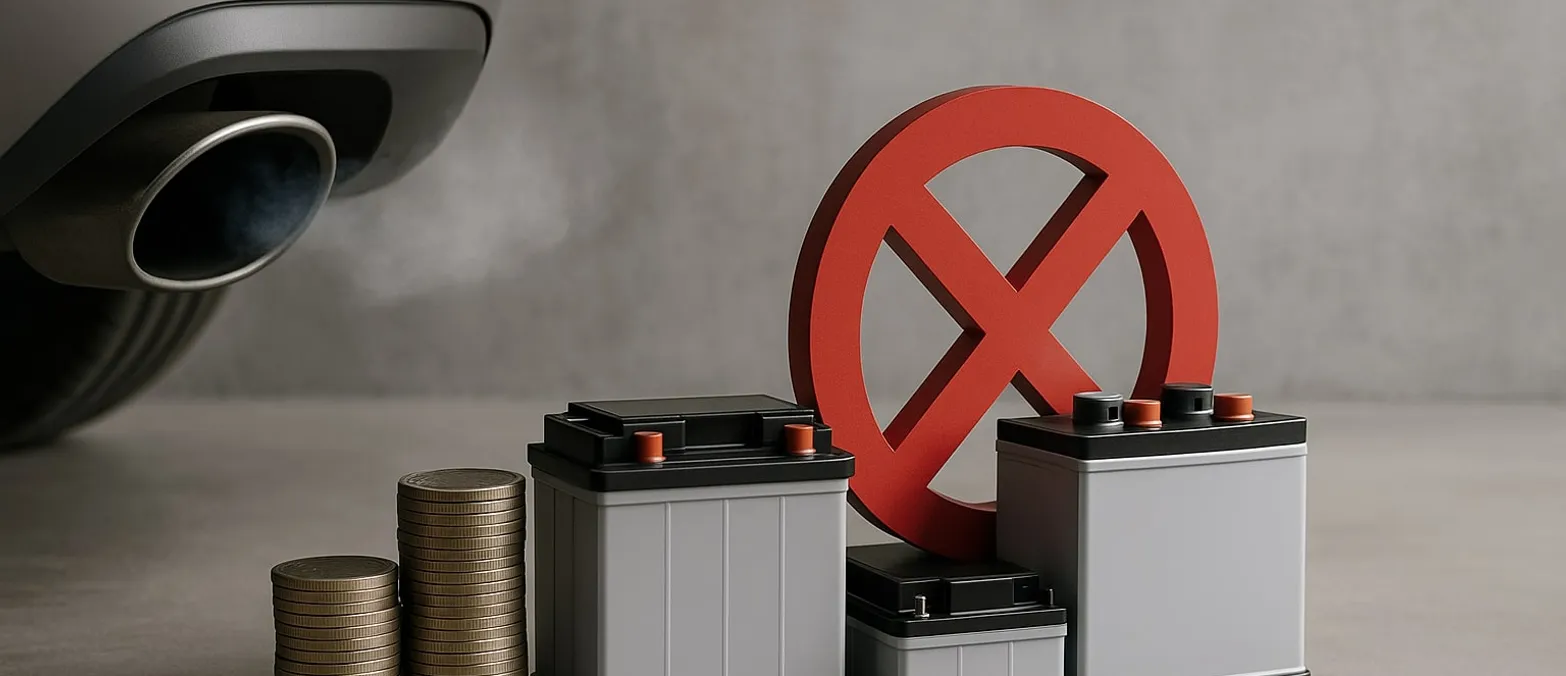
Porsche Halts German Battery Production to Focus on Combustion Engines
Porsche's Bold Move: Halting Battery Production in Germany to Shift Focus
In a surprising turn of events, Porsche has decided to cease its ambitious battery cell production plans in Germany, refocusing its efforts on research and development within its subsidiary, the Cellforce Group. This move signals a strategic pivot towards traditional combustion engines amidst faltering demand for electric vehicles and high production costs. Over 200 jobs hang in the balance as the company reassesses its approach to electromobility.
Porsche's Shift from Production to Research
Porsche's decision to halt domestic battery cell production is poised to ripple through the automotive industry. As Germany’s role as a hub for electric vehicle innovation takes a hit, Porsche's prioritization of combustion engines might seem counterintuitive but reflects the harsh market realities: demand for electric cars is not currently meeting expectations, and the costs of battery cell production remain steep. The Cellforce Group, once a beacon of hope for Porsche’s electric future, is left pivoting from production to focusing solely on research and development.
The workforce at Cellforce, now facing uncertainty, was once buoyed by high hopes and substantial government support, with over 60 million euros injected to kickstart the battery project. Originally envisioned as Porsche's transition into the electric era, this scaling back underscores the challenges at the confluence of innovation and economic viability.
Reassessing the Electric Dream
Founded in 2022, Cellforce was a cornerstone of Porsche's electrification ambitions, bolstered by fresh capital and political backing intended to secure a technological edge. However, faced with the stark realities of insufficient scalability and prohibitive costs, the company is refocusing its strategy. Porsche CEO Oliver Blume said, "We are reorganizing our battery activities, focusing on cell and system development. We lack the necessary volumes and economies of scale for our own cell production."
While Porsche’s commitment to electromobility remains firm, the company will no longer pursue in-house battery cell manufacturing. Instead, partnerships with entities like PowerCo will spearhead the transition of research insights into market-ready technologies, maintaining an innovative edge without the burden of production costs.
A Strategic Pivot Reflecting Market Realities
Porsche’s reinvigorated focus on combustion engines could be seen as a step back, but it is more so a pragmatic response to market conditions. While electric vehicles account for 57% of Porsche’s European sales, global figures linger at 36%. The critical markets of the U.S. and China have not yet shown the dynamism needed to justify the hefty investments in battery cell production. Instead, Porsche is channeling its efforts towards bolstering research and leveraging the legacy strength of its high-performance combustion engines, without abandoning its electric vehicle ambitions.
This strategy shift from Porsche underscores a broader message: even the most prestigious brands with strong electrification rates must constantly recalibrate their strategies in response to market dynamics and cost realities. As Porsche reassesses its role in this transformation, it signals that navigating the crossroads of tradition and innovation requires ongoing adaptation and balance.
FAQ
Does the Porsche Stock Have Future Potential?
Yes, over the long term, Porsche's stock presents potential due to the brand's global cachet. However, near-term stock performance will depend significantly on its strategy around electromobility, global market conditions, and economic environments. While short-term volatility is likely, many investors bank on Porsche's stability and innovative prowess for long-term gains.
What Dividend Will Porsche Pay in 2025?
The exact dividend for 2025 will depend on Porsche's financial performance for the 2024/25 period and will be determined at the annual shareholders' meeting. Historically, Porsche has offered attractive dividends, making it appealing to income-focused investors.
How Low Might Porsche Stock Go?
Exact predictions are impossible, as price movements are influenced by factors like sales figures, economic conditions, interest rates, and market sentiment. Analysts provide price targets for guidance, but fluctuations are normal for automotive stocks.
Why is Porsche Stock Dropping Significantly?
Reasons often include disappointing sales, shifting market expectations, or strategic decisions like halting EV projects. Global factors such as weak demand in key markets like China or high interest rates can also pressure stock prices.
Author
Headlines

Consent was never given.
You need to first accept consent to see this content from TradingView.