Samsung to Increase Chip Production for Tesla
Tesla's AI5 Chip Could Transform Autonomous Driving and Robotics
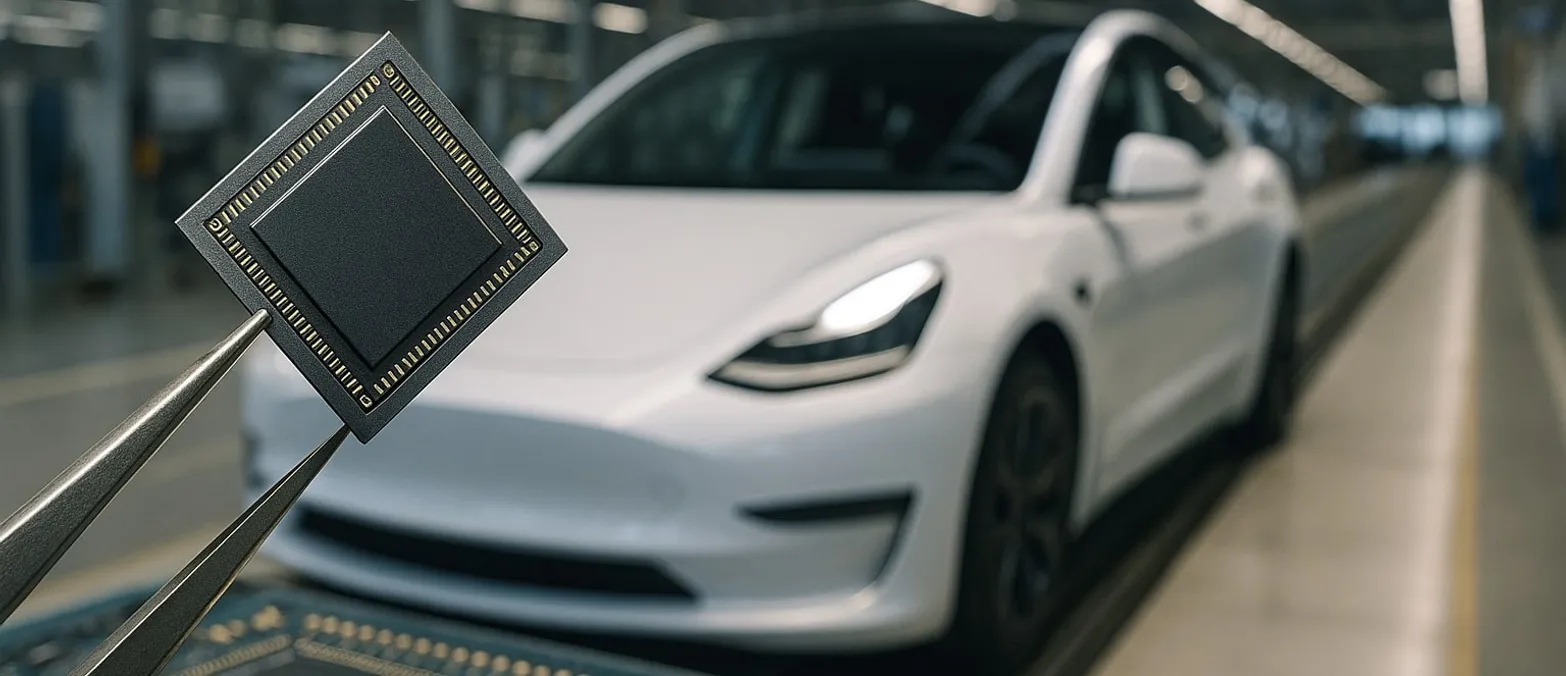
In a daring move to redefine the role of artificial intelligence in both transportation and technology, Tesla is set to introduce its groundbreaking AI5 chip. Developed in partnership with Samsung in Texas and TSMC in Arizona, this new processor is poised to power Tesla’s autonomous vehicles, robots, and data centers. Elon Musk, Tesla's visionary CEO, is leading the charge towards “overproduction” to ensure that the company has more chips than needed at its disposal, aiming for efficiency through a radically simplified design. The AI5 chip aims to deliver more power and independence in AI development, partially replacing but still complementing Nvidia chips.
Double the Production, Double the Efficiency
Tesla's AI5 chip signals a bold shift towards in-house AI development, as announced by Elon Musk during a recent quarterly conference. The chip will be manufactured by giants Samsung and TSMC at their respective facilities in Texas and Arizona, ensuring a robust supply that exceeds Tesla’s immediate needs. Musk envisions reallocating these surplus AI5 chips for use within Tesla’s own data centers, enhancing the company’s computational capabilities.
The AI5 represents Tesla's fifth generation of AI processors, adept at processing the image and sensor data necessary for the realms of autonomous driving and robotic functions. This development is part of Tesla’s strategy to reduce reliance on external suppliers while maintaining a partnership with industry leader Nvidia. While Nvidia’s GPUs will continue to train Tesla’s AI models, the AI5 will execute tasks in Tesla’s vehicles and robots.
Marching Towards Independence
Tesla’s pivot to self-produced chips is both a technical and economic leap. The company has been adopting its own hardware since 2019, when it transitioned from Nvidia’s Drive chips to its bespoke designs. The AI5 chip, which stems from the ambitious Dojo project formerly led by ex-Apple engineer Peter Bannon, gives Tesla complete control over the chip’s design, functionality, and cost efficiency. By catering solely to Tesla’s requirements, unnecessary components like older GPUs and signal processors are eliminated, making the architecture simpler and potentially more efficient. Musk boldly predicts that the AI5 will offer the best performance-to-cost ratio in the AI field, possibly setting a new industry standard.
AI on the Road and Beyond
The AI5 chip is intended to supercharge Tesla’s Autopilot and Full-Self-Driving systems, packing its innovative power into a form half the size of comparable high-end chips from Nvidia and AMD. This chip is tailor-made for real-time automotive computations, but its potential doesn’t stop there. Musk envisions AI5 driving Tesla’s humanoid robots, Optimus, and empowering xAI—his AI enterprise’s data centers, with a new supercomputing hub underway in Memphis, Tennessee.
Tesla’s bold stride aligns with an industry-wide shift where tech giants like Google, Amazon, and Microsoft develop dedicated AI processors to decrease reliance on Nvidia. Through the AI5, Tesla aims to prove that true efficiency comes not from raw computing power but from strategic specialization. Musk remains unapologetically optimistic yet grounded, asserting that while Tesla won’t replace Nvidia, they’re committed to shaping the future of machine intelligence on their terms.
Author
Headlines

Consent was never given.
You need to first accept consent to see this content from TradingView.