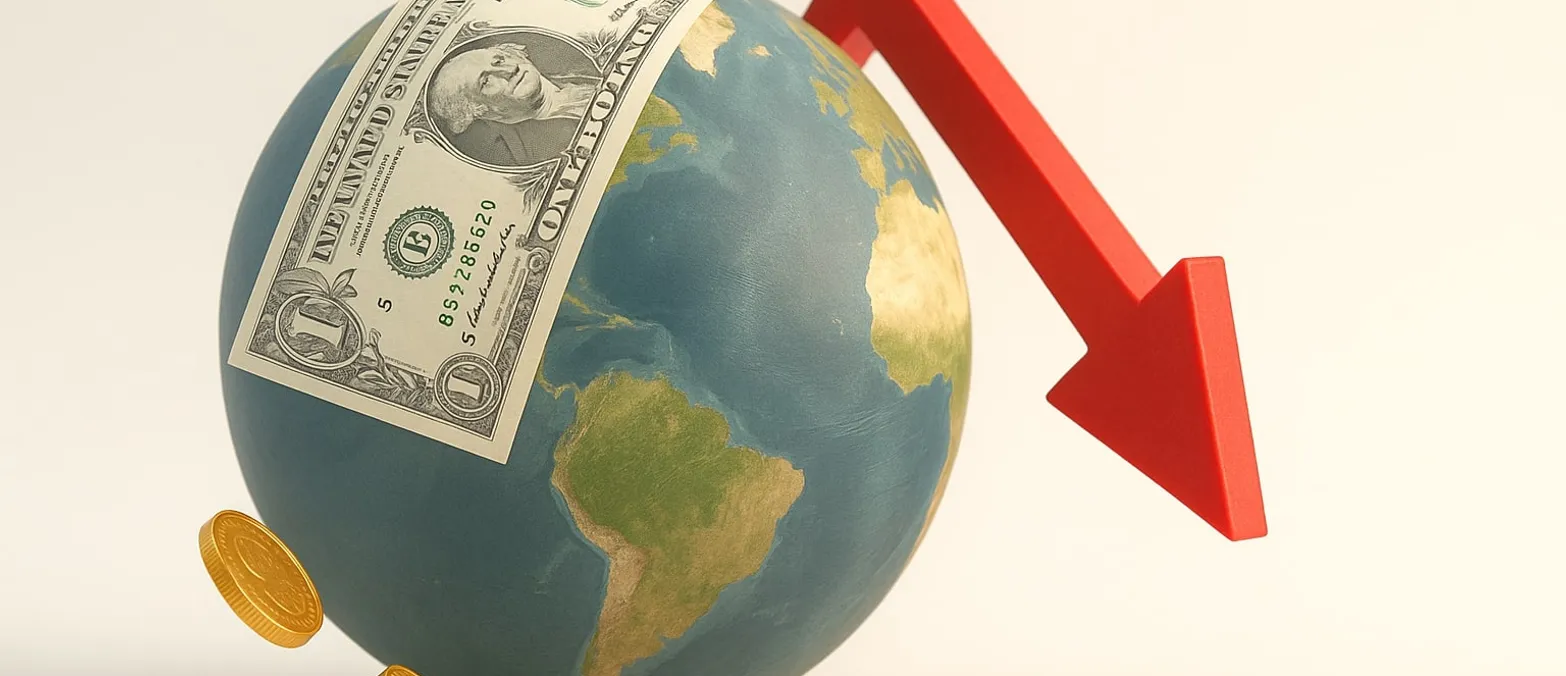
US Dollar Faces Biggest Crash in 50 Years: Implications for Bitcoin and More
Dollar's Nose Dive in 2025: What U.S. Investors Need to Know
The U.S. dollar has taken a significant hit in the first half of 2025, plummeting roughly 10.8% against a currency basket of the euro, yen, and pound. This marks the dollar's worst half-year performance since 1973, attributed to several key factors like geopolitical uncertainties, economic policies under President Trump, new tariffs, increasing national debt, and speculations about politically motivated leadership changes at the Federal Reserve.
Investors are anticipating upcoming interest rate cuts, adding downward pressure on the dollar. Additionally, there is a noticeable retreat by foreign investors, accelerating capital flight. According to Deutsche Bank, the exchange rate with the euro could potentially drop to 0.62 euros per U.S. dollar from the current 0.85, straining the U.S. economy while unsettling global financial markets.
Dollar Down, Gold Soars
The dollar's decline has also dragged the dollar index down to its lowest level since March 2022, while lifting the British pound to a three-year high of $1.37. A weak dollar has worked wonders for gold prices, which have surged 25% since January as investors flock to safe-haven assets during these uneasy times.
Troublesome Dynamics: Tariffs, Fed Turmoil, and Debt
The geo-economic turmoil under Trump's administration is a key reason behind the dollar's poor performance, with analyst insights pointing to tariffs, chaotic governance, and mounting national debt. Analyst David Morrison from the UK-based broker Trade Nation highlights these elements further eroding confidence. Moreover, anticipated interest rate cuts by the Federal Reserve are expected to increase market liquidity, further affecting exchange rates. Trump's public criticism and hint at replacing Fed Chair Jerome Powell with a more dovish candidate could also weaken the dollar more, casting doubt on the central bank's independence.
Capital Flight and Structural Weaknesses
Foreign investor withdrawal from U.S assets intensifies the dollar's plight, with potential devaluation up to 35%, pushing exchange rates to 1.59 USD/EUR. The United States' reliance on foreign debt to finance its 4-5% GDP current account deficit is at risk. Despite protectionist measures like tariffs, trade imbalances remain, potentially impacting the U.S. negative net international investment position, which about -90% of GDP, underlining long-term vulnerabilities.
Global Financial Market Ramifications
The dollar’s weakness is a double-edged sword for global markets, as the euro appreciates by over 13% in the past six months. Speculative traders are increasingly betting against the dollar, evident in options markets, whereas the monetary policy divergence between the U.S. and Eurozone solidifies this trend, as the U.S. anticipates rate cuts compared to the Eurozone's moderate adjustments. The structural dollar frailty, compounded by political uncertainty and budgetary chaos in Washington, further strains global market confidence.
Future Implications of the Dollar Crash
If Deutsche Bank's projections hold true, an exchange rate of 1.59 USD/EUR could signal a significant power shift in the global financial hierarchy. While challenging for export-driven nations like Germany, the downturn represents potential opportunities for risk assets like Bitcoin historically. However, any severe economic crisis could weigh heavily on stocks and cryptocurrencies, regardless of dollar dynamics. The upcoming months demand keen attention to the U.S. government and Fed's responses to stabilize the dollar and preserve global market trust. Critical moves will hinge on Trump's potential appointment of a new Fed chair replacing Jerome Powell.
Author
Headlines

Consent was never given.
You need to first accept consent to see this content from TradingView.